



Biology tells us it is an organism composed of cells, tissues, organs, and chemical processes. Medicine studies its functions. Anatomy maps its structure. Physiology explains its regulation. None of those are incorrect, yet none answer the philosophical question this essay is concerned with. They describe the body’s composition and behavior without defining its place within the larger architecture of existence.
This essay is not an exploration of anatomy, medicine, or evolutionary biology, nor is it an argument for any particular religious or spiritual doctrine. Those disciplines address important questions within their own domains. The purpose here is more fundamental. It is to establish a precise definition of the body within the cosmological framework developed throughout my work, to determine what the body is, what it is not, and the specific function it serves within the broader architecture of reality.
Only after the body has been properly defined can meaningful discussions about embodiment, health, intuition, subtle bodies, altered states, death, or spiritual development proceed without conflating fundamentally different aspects of existence. Before asking what a body can do, how it changes, or why it exists, we must first answer the simpler and more foundational question:
What is the body?
━━━━━━━━━━━━━━━ ✦ ━━━━━━━━━━━━━━━
꩜ What We Mean by “Body”
Before the body can be examined philosophically, it must first be defined as a category of existence. This is where many discussions become confused. The word body is often used interchangeably with terms such as matter, flesh, biology, anatomy, organism, or even the self. While these concepts are related, they are not synonymous. A precise definition requires distinguishing the body itself from the materials that compose it and the processes that occur within it.
Within the framework developed throughout this work, a body is not simply a collection of biological parts. It is a living, self-organizing system whose defining characteristic is embodiment. It exists as an integrated architecture capable of maintaining its own organization while continuously exchanging matter and energy with its environment. Cells die, proteins are replaced, molecules enter and leave, yet the body persists as a coherent living process rather than a fixed physical object.
This distinction is essential. A pile of cells is not a body. A collection of organs is not a body. Even a complete inventory of every molecule within a living organism does not explain what a body is. Organization precedes composition. Structure precedes function. A body emerges when biological components become integrated into a unified, self-regulating system capable of sensing, responding, adapting, repairing, and sustaining itself over time.
For the purposes of this work, the body will be understood as the biological architecture through which embodied existence becomes possible. Everything else discussed throughout this essay follows from that definition — including the claim that will emerge at its center: that the body’s deepest function is not to generate experience, but to restrict it.

━━━━━━━━━━━━━━━ ✦ ━━━━━━━━━━━━━━━
꩜ What the Body Actually Is
A body is a living architecture that localizes existence within a specific physical environment. It is a self-organizing system composed of matter, yet defined by organization rather than composition. Its defining characteristic is not the materials from which it is built, but the dynamic relationships that allow those materials to function as a single coherent organism.
Unlike static objects, the body exists as an ongoing process. Every moment it regulates internal conditions, exchanges energy with its environment, repairs damaged tissue, replaces aging cells, and maintains the organizational stability required for life. Although the molecules that compose the body change continuously, the body persists because its structure remains organized. Biological continuity is therefore not maintained by permanence of matter, but by continuity of organization.
The body is also the primary boundary between an organism and its environment. Every interaction with the physical world occurs through embodied processes. Light reaches the eyes before it becomes vision. Mechanical vibration reaches the ears before it becomes sound. Chemical compounds contact receptors before they become taste or smell. Pressure becomes touch. Temperature becomes sensation.
Here the framework departs from the common assumption. The body does not manufacture experience out of these physical events, the way a factory assembles a product from raw material. If consciousness is not a byproduct of matter but the substrate matter arises within, then the body’s role is not generative. It does not create awareness from nerve signals. It restricts an already-present field of awareness down to what a single organism, in a single location, can survive knowing.
Within the cosmological framework developed throughout this work, the body should therefore be understood as the aperture through which embodied existence becomes possible — the structural system that narrows, focuses, and localizes awareness into the conditions necessary for perception, movement, regulation, adaptation, and survival. It is neither the source of consciousness, nor identity, nor thought. It is the pinhole through which each becomes physically expressed.
━━━━━━━━━━━━━━━ ✦ ━━━━━━━━━━━━━━━
꩜ The Body as a Living System
The body should not be understood as a fixed object. It is a continuous biological process. Although it appears stable from moment to moment, nearly every aspect of the body exists in a state of ongoing change. Cells divide, proteins degrade and are replaced, hormones fluctuate, microorganisms enter and leave, energy is consumed and restored, and damaged tissues are continually repaired. Stability is therefore not produced by permanence, but by regulated change.
Most physical objects remain the same because they resist change. The body remains the same because it actively manages change. Life is not defined by stillness. It is defined by continuous self-maintenance. The body constantly exchanges matter and energy with its environment while preserving the organizational relationships that allow it to remain alive. Remove those relationships, and the body ceases to function as a body regardless of whether every individual component remains physically present.
The body therefore exists as a self-organizing system rather than a static structure. Self-organization refers to the capacity of a living system to regulate, repair, adapt, and preserve its own internal coherence without external instruction directing every individual process. Countless mechanisms operate simultaneously to maintain equilibrium. Temperature, chemistry, immune activity, respiration, circulation, metabolism, and repair all function together as interconnected processes rather than isolated events. The body is not governed by a single organ or command center. It emerges through the coordinated activity of the system as a whole — and that same principle of decentralized coherence is what allows a body to exist without a nervous system at all, a point the framework returns to below.
This also explains why the body cannot be reduced to its individual parts. A heart is not a body. A brain is not a body. A skeleton is not a body. Even a complete inventory of every organ remains only a collection of structures until those structures become integrated into a living, self-regulating whole. The body emerges from organization, not accumulation. Its defining property is the coherent relationship between its components rather than the components themselves.
Seen this way, the body is less accurately described as a biological object than as a biological event. It is an ongoing process of organization that persists through continual transformation. Life is not the absence of change. Life is the successful organization of change — organization that, in every case, shapes not just how an organism survives, but how much of reality it is structurally permitted to touch.
━━━━━━━━━━━━━━━ ✦ ━━━━━━━━━━━━━━━
꩜ The Body as Ancient Technology
Once the body is understood as a living system, another implication follows: the body is not merely biological. It is technological.
Technology does not begin with metal, machinery, or electronics. At its most fundamental level, technology is an organized system designed to perform a function. By that definition, the body is one of the oldest and most sophisticated technologies known to exist. It senses, stores information, transmits signals, regulates internal conditions, repairs damage, adapts to changing environments, converts matter into energy, and reproduces its own architecture.
Modern machines require external builders, programmers, fuel sources, maintenance, and replacement parts. The body performs many of these functions internally. It grows its own structure, rewrites its tissues, detects errors, responds to threats, and continuously adjusts its operation without the conscious mind directing each individual process. The heart does not wait to be told to beat. Cells do not ask permission to divide. The immune system does not require the personality to identify every foreign organism. The body operates through a distributed intelligence embedded within its structure.
This is not metaphorical intelligence in the poetic sense. It is functional intelligence expressed through organization. Every system within the body receives information, interprets conditions, and produces a response. Hormones act as chemical instructions. Nerves transmit electrical signals. Receptors detect changes in the internal and external environment. DNA stores the biological code required to construct, maintain, and reproduce the organism. The body is not simply made of matter. It is matter arranged into an active information-processing system.
What makes this technology ancient is not only the age of the human species. The systems composing the human body existed long before modern humanity appeared. Cellular communication, microbial cooperation, electrical signaling, genetic inheritance, chemical sensing, immune recognition, tissue repair, and biological adaptation were already operating across life in forms far older than the human body itself. Humanity did not invent these processes. The human form inherited and integrated them.
The body is therefore a convergence of ancient solutions.
Its architecture contains layers of biological intelligence developed across immense spans of time. Each organ represents a specialized process. Each cell contains access to a larger genetic blueprint. Each sensory system narrows reality into a range the organism can survive interpreting. Each regulatory process contributes to the preservation of the whole.
Seen this way, the body is not a primitive container waiting for the mind to control it. It is a living platform whose operational complexity exceeds anything humanity has been able to construct artificially. It is self-building, self-regulating, partially self-repairing, environmentally responsive, and capable of hosting a localized conscious perspective.
The body does not merely resemble technology.
The body is technology—only older, wetter, more adaptive, and more alive than the machines humanity later learned to build.
━━━━━━━━━━━━━━━ ✦ ━━━━━━━━━━━━━━━
꩜ The Architecture of the Body
Like any sufficiently advanced technology, the body is not composed of a single mechanism. It is an integrated architecture of specialized systems, each performing distinct functions while remaining inseparable from the whole. No component exists in isolation. Every cell, tissue, organ, and network communicates continuously with every other, producing an organism whose intelligence emerges through relationship rather than centralized control.
DNA serves as the body’s foundational code. It contains the instructions required to construct, maintain, repair, and reproduce the organism. Yet this code is not static. Genes are activated and silenced in response to nutrition, stress, environment, hormones, injury, age, and countless other conditions. The body therefore does not simply follow a fixed blueprint. It continuously interprets and expresses that blueprint according to circumstance.
Cells are the body’s autonomous living units. Each one generates energy, communicates with neighboring cells, repairs damage, responds to its environment, and performs specialized tasks according to its role within the larger organism. Although trillions of cells make up a single human body, each possesses remarkable independence while simultaneously contributing to the coherence of the whole. The body is less like one machine than a civilization of living participants operating through extraordinary coordination.
The nervous system forms the body’s electrical communication network. Through rapidly changing electrical impulses and chemical messengers, it coordinates movement, sensation, regulation, memory, and response. Long before conscious thought enters the picture, this network is already monitoring balance, temperature, pressure, injury, orientation, and countless other variables necessary for survival.
The endocrine system provides a second communication network built not from electricity, but chemistry. Hormones travel through the bloodstream carrying instructions that influence metabolism, growth, reproduction, stress responses, sleep, appetite, emotion, healing, and development. Where the nervous system communicates in milliseconds, the endocrine system communicates across minutes, hours, days, and even years.
The immune system functions as an immense recognition network. It constantly distinguishes between what belongs, what does not, what has been damaged, what must be repaired, and what should be removed. Rather than acting only during illness, it quietly surveys the body every moment, preserving the organism’s internal integrity through continuous recognition and adaptation.
The circulatory system operates as the body’s transportation infrastructure. Blood distributes oxygen, nutrients, hormones, immune cells, heat, and chemical information to every living tissue while simultaneously carrying waste products away for removal. It does far more than move fluid. It connects every specialized system into a single coordinated organism.
The fascial network forms one of the body’s least appreciated architectures. Surrounding muscles, organs, nerves, bones, and blood vessels, fascia creates a continuous web of structural support and force distribution that links the body into a unified mechanical system. Movement in one region often influences distant regions because the body is woven together rather than assembled from isolated parts.
The skeleton provides more than support. Bone protects delicate organs, stores minerals, produces blood cells, remodels itself according to mechanical stress, and establishes the body’s structural geometry. Rather than functioning as lifeless scaffolding, bone exists as living tissue that continually responds to the organism’s changing demands.
The sensory organs act as specialized environmental instruments. Eyes detect specific wavelengths of light. Ears register vibration. The skin responds to pressure, temperature, and texture. Taste and smell analyze chemical composition. Each sensory system samples only a narrow portion of reality, gathering the information necessary for the body to navigate its environment while excluding infinitely more than it allows to enter awareness.
Individually, each of these systems performs extraordinary work. Collectively, they become something even more remarkable: a living architecture capable of maintaining itself, adapting to changing conditions, preserving its own organization, reproducing its structure, and providing consciousness with a stable point of interaction within the physical world.
No human engineer designed every heartbeat after birth. No technician rewrites your tissues while you sleep. No programmer manually coordinates the trillions of interactions unfolding inside you every second.
The body accomplishes all of this simply by being what it is.
Its technology is not manufactured.
It is alive.
━━━━━━━━━━━━━━━ ✦ ━━━━━━━━━━━━━━━
꩜ The Body as a Reflection of Reality
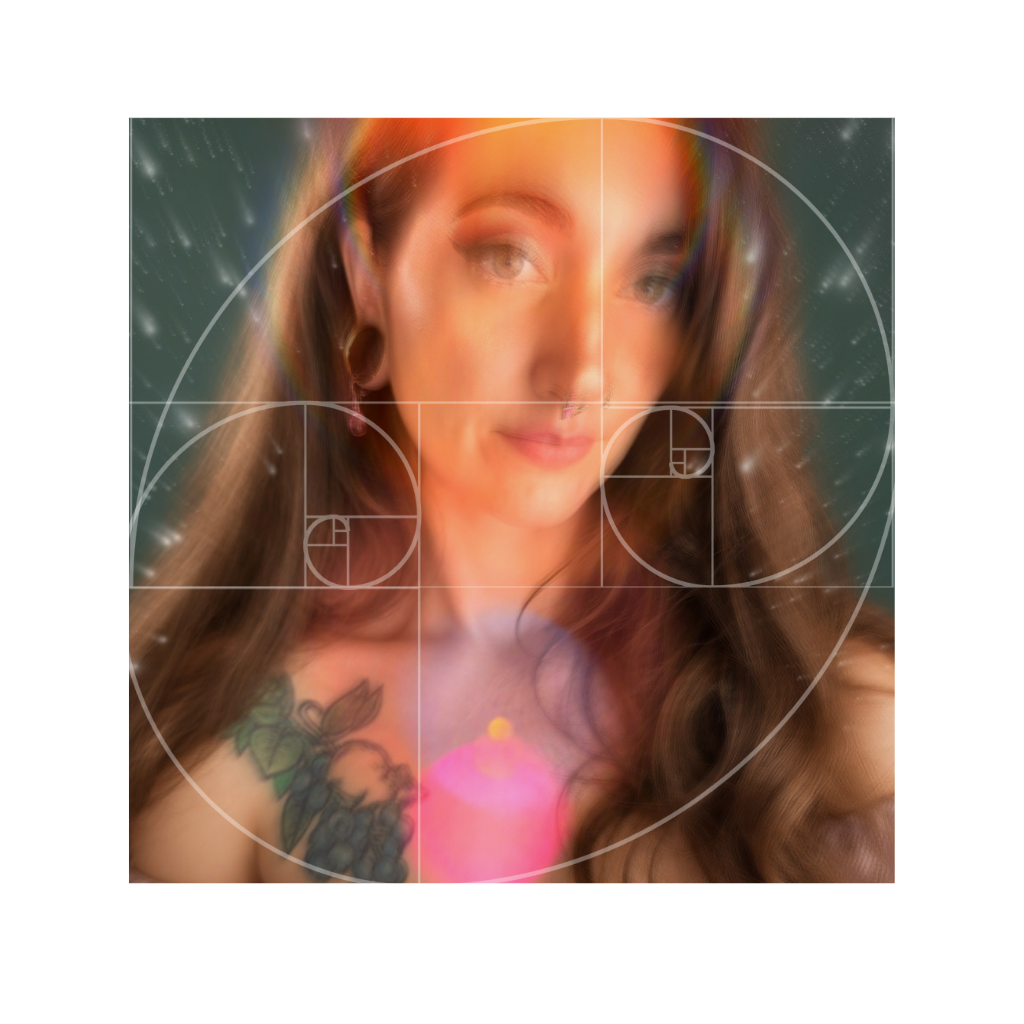
Across philosophy, mysticism, and countless spiritual traditions, the human body has rarely been understood as an isolated biological object. Instead, it has often been viewed as a living reflection of the greater patterns that shape reality itself. The body is treated as a microcosm—a smaller expression of a much larger order—where the structures of the individual echo the structures of the cosmos. Rather than existing apart from the universe, the body participates in it, carrying within itself the same rhythms, proportions, cycles, and relationships that unfold on every scale of existence.
This principle appears in many forms throughout history. Hermetic philosophy expresses it through the phrase, “As above, so below,” suggesting that the patterns governing the heavens are reflected within the individual. Astrology is founded upon the idea that celestial cycles correspond to human life, using the movements of planets and stars as a symbolic language through which temperament, timing, and natural tendencies can be interpreted. Palmistry proposes that the hands preserve a map of character and experience, with lines, mounts, and proportions reflecting aspects of one’s nature and development. Traditional Chinese Medicine understands the face, tongue, pulse, and body as mirrors of the internal organs and energetic balance. Reflexology maps the entire body onto the feet, while iridology interprets patterns within the iris as reflections of the body’s condition. Across these and many other systems, the underlying intuition remains remarkably consistent: the part contains information about the whole.
Whether one approaches these disciplines as literal sciences, symbolic languages, systems of pattern recognition, or contemplative traditions, they all begin from the same philosophical assumption—that reality is deeply ordered, and that this order repeats across scales. If nature is recursive rather than random, then the body is not simply a vessel moving through the universe. It is one of the places where the universe becomes visible to itself.
Within this perspective, the body is more than anatomy. It is a map, a record, and a language. Its proportions, rhythms, asymmetries, cycles, and structures are not viewed as isolated facts, but as expressions of larger patterns unfolding throughout reality. To study the body, then, is not merely to study flesh. It is, in many traditions, to study the architecture of existence reflected in living form.
━━━━━━━━━━━━━━━ ✦ ━━━━━━━━━━━━━━━
꩜ The Body as Aperture
Every system exists in relationship with something beyond itself. The body is no exception. Its defining characteristic is not simply that it is alive, but that it exists at the boundary between an organism and its environment. And a boundary can do one of two things: it can generate what passes through it, or it can select what passes through it. This is the fork the entire question of embodiment turns on.
The conventional view treats the body as generative — as though vision, hearing, and thought are manufactured fresh at the nerve ending, built up from raw sensory static into something meaningful. But this framework starts from a different premise: consciousness is not produced by matter, it is the substrate matter arises within. Nothing needs to be built from nothing. What the body does instead is cut a shape into something that was never absent to begin with.
This is the aperture principle, and it has a real lineage outside of this work. Bergson described perception and memory as fundamentally a matter of exclusion — the brain’s task being to filter out the vast majority of what could be known so that an organism can act. Aldous Huxley, writing on the same idea, described ordinary consciousness as a narrow trickle through what he called Mind at Large, with the nervous system functioning as a reducing valve rather than a generator. C. D. Broad proposed something structurally identical. None of these thinkers agreed on much else, but they converged on the same architecture: the brain and body do not add experience to the world. They subtract it, down to a survivable, actionable point of view.
This reframes the body’s boundary entirely. Light enters through the eyes not to be converted into vision from nothing, but to determine which slice of an already-present field of awareness a particular organism will be permitted to occupy. Sound, touch, temperature, and chemical sensation operate the same way. The body is not a translator assembling meaning out of noise. It is a filter, and filtering is a much stronger claim than translating — because a filter implies there was always more on the other side of it than gets through.
Understanding the body as an aperture rather than a generator changes what embodiment means. A body is not the place where consciousness begins. It is the place where consciousness narrows enough to become someone, somewhere, for just a little while…
so use the time you have here wisely.
━━━━━━━━━━━━━━━ ✦ ━━━━━━━━━━━━━━━
꩜ The Body as Restriction, Not Generation
If the body is an aperture, its most important property is not what it lets in — it’s what it leaves out, and how it decides.
Every sensory system is defined as much by its blind spots as by its range. Human eyes register a narrow band of the electromagnetic spectrum and nothing else. Human ears hear a limited range of frequencies while bats and elephants hear far outside it in opposite directions. Human skin cannot detect magnetic fields the way a migratory bird’s can. None of these are failures of the body. They are what the body is for. An aperture that let in everything would not produce a perspective — it would produce the very undifferentiated totality perspective is supposed to be carved out of. A pinhole that isn’t small isn’t a pinhole.
This means restriction is not a limitation imposed on an otherwise complete experience. Restriction is the mechanism that makes any experience possible at all. Take away the narrowing, and you don’t get a bigger, better version of a human. You get no organism, no vantage point, no here — only the undivided field the aperture was cutting a shape out of.
This is also where the internal and the external stop being two separate stories. Fluctuations in body chemistry becoming hunger, changes in oxygen becoming breath, hormonal shifts becoming mood — these are not the body generating inner experience independently of the outer world. They are the same restriction operating inward: the field of awareness narrowed not only to a location in space, but to a specific chemical and physiological condition. The body filters what can be known both about the world and about itself, through the same aperture, by the same principle.
And restriction runs in the outward direction too. Thought becomes speech through coordinated muscle activity. Intention becomes movement. Emotion becomes expression. This is not the aperture reopening into generation — it is the same narrow channel being used in reverse, translating a restricted interior state back into a form the wider world can register. The body is not two different systems, one for taking in and one for putting out. It is one aperture, operating bidirectionally, always narrowing.
━━━━━━━━━━━━━━━ ✦ ━━━━━━━━━━━━━━━
꩜ The Body as Localization
Every living body occupies a specific location within reality. This appears obvious until its implications are followed all the way through. A body is the mechanism through which an undivided field of awareness becomes localized into a single organism with a unique perspective, orientation, and relationship to its environment.
Localization is the aperture’s signature. A body exists here rather than there. It occupies a finite position, experiences a finite sequence of events, and interacts with only a small portion of reality at any given moment — not because reality is small, but because the body’s function is to make it small enough to survive perceiving. Without localization, there is no individual point of interaction between an organism and the world it inhabits, because there is no “individual” at all — only the whole, undifferentiated field.
This localization is not merely spatial. It is biological, temporal, and experiential. Every body develops through time, accumulates history, adapts to its environment, and maintains continuity through ongoing self-organization. No two bodies occupy the same position, experience the same sequence of events, or narrow the field in exactly the same way. Each becomes a distinct aperture, shaped by its unique relationship with reality.
The body therefore establishes perspective — and perspective, on this framework, is not evidence that consciousness was built locally from the ground up. It is evidence of a cut, a specific and particular narrowing of something that was never local in the first place. Gravity, orientation, movement, scale, distance, and sensation are not raw material perspective is built from. They are the shape of the cut itself.
━━━━━━━━━━━━━━━ ✦ ━━━━━━━━━━━━━━━
꩜ Beyond the Human Body
None of this is specific to human bodies, or even to bodies with nervous systems. If the aperture principle is correct, it cannot only apply to organisms complex enough to have a brain, or the whole framework quietly smuggles humans back into the center of the cosmos it claims to be describing.
What differs between a human, a bat, a jellyfish, a fungal mycelial network, or a single bacterium is not whether restriction is happening, but the geometry of the restriction — the shape and scope of the aperture. A bat’s aperture is cut for echolocation and largely closed to color. A migratory bird’s is cut to register magnetic orientation in a way no human aperture allows. A plant has no centralized nervous system and no single locus that looks like “experience” to a human observer, yet it still turns toward light, still signals chemically to neighboring plants under attack, still closes in response to touch — a diffuse, decentralized narrowing of the same underlying field, filtered through an entirely different structural logic than an animal’s. A mycelial network’s aperture is distributed across an area the size of a forest, with no single point where anything is “happening,” and yet the network still regulates, still responds, still maintains the coherence that defines a living system in the first place.
This carries a real advantage over the more familiar claim that consciousness is smeared everywhere in tiny discrete units — the panpsychist position, which then has to explain how those units combine into a single unified mind, a problem that has never been cleanly solved. This framework does not need combination. If the substrate was never divided to begin with, there is nothing to assemble. Each body does not build a mind up out of parts. It simply cuts a specific-shaped hole into something that was already whole. Complexity does not create more consciousness, as if consciousness were a quantity to be manufactured in greater volume. Complexity creates a wider, more differentiated aperture onto the same total field. A human does not possess more of some substance than a bacterium. A human’s aperture is simply wider and more structurally elaborate — capable of reflexivity, language, abstraction — while a bacterium’s is narrow, reflexive-free, but no less a real point of access to the same underlying field.
This also quietly changes what’s left of the hard problem of consciousness. The question is no longer how matter generates experience from nothing, because that question dissolves the moment generation is replaced with restriction. What remains is a different, and far more tractable, question: what determines the shape of an aperture? What is it about a given organization of matter — its feedback loops, its degree of internal integration, its complexity — that determines whether it cuts a wide, reflexive hole or a narrow, non-reflexive one? That is a question biology and information theory can actually make progress on, without ever needing to answer the harder metaphysical question underneath it: why there is a field to filter in the first place.
━━━━━━━━━━━━━━━ ✦ ━━━━━━━━━━━━━━━
꩜ Closing
The body, then, is where consciousness is cut down to size — narrowed, angled, and localized into something small enough for a single organism to survive being. Every body, human or otherwise, is doing the same fundamental work through a different-shaped hole: taking the whole and rendering, from it, a here, a now, and a someone.
That is not a diminishment. A pinhole is not a lesser version of the light — it is the only reason the light ever resolves into an image at all.
The body, however, is only one part of a larger architecture. If the body localizes awareness into a living biological perspective, it still leaves two fundamental questions unanswered: Who is having that experience, and how is that experience interpreted? Within the framework developed throughout this work, those questions belong to the soul and the mind. The soul provides continuity of identity—the persistent pattern that remains coherent across change—while the mind organizes, interprets, models, and navigates experience as it unfolds. The body is therefore neither the self nor the thinker. It is the living interface through which identity becomes embodied and thought becomes situated within a particular place, time, and perspective. Together, body, mind, and soul form three distinct yet inseparable aspects of a single living process.




Leave a Reply