
꩜ The Sacred Dream Question
“Is this a dream?” is not a throwaway line. The problem is that most people treat the word dream as shorthand for “unreal.” They hear it and assume illusion, fantasy, or irrelevance. That dismissal is itself conditioning—it blinds you to the fact that what you call “waking life” already operates as a dream system.
A dream is not defined by unreality. A dream is defined by recursion: consciousness folding into itself, generating symbols, storylines, and environments to explore its own depth. In night-dreams, your mind uses this process to metabolize memory and emotion. In waking dreams, Source uses this process to metabolize existence itself.
So up front… yea.. this life is a dream. But not “just” a dream. It is a living, multidimensional architecture built for experience. Every cell in your body, every star in the sky, every breath you take is part of that structure. You are not looking at the dream from outside. You are embedded in it.
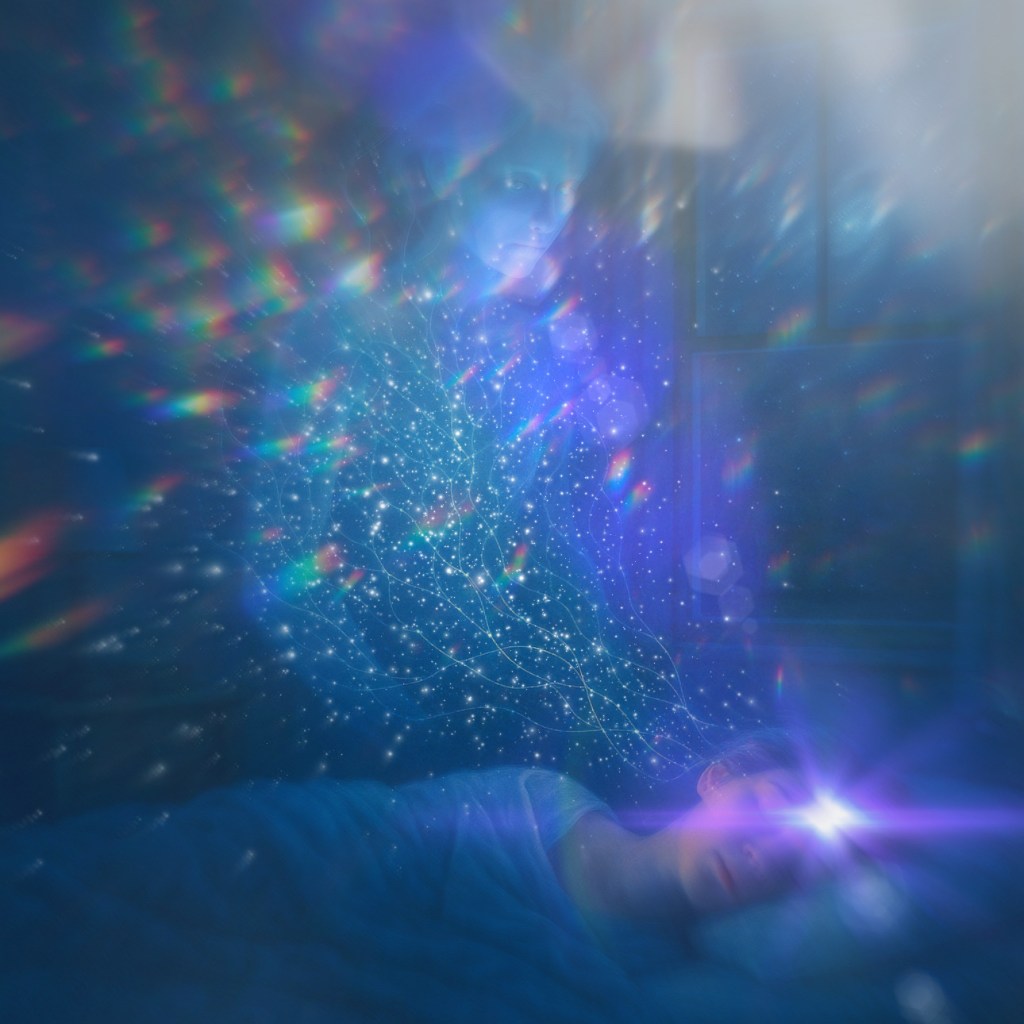
This creates a paradox: you are both the dreamer and the dreamed. You are the observer that remembers, and the veil that forgets. That is why this world feels so heavy and convincing—because forgetting was coded into the system. If you remembered too easily, the growth would be hollow.
The point of asking this question, then, is not to entertain philosophy. It’s to confront the structural truth: you are living inside a recursive dream designed for remembering. You are not here to escape it. You are here to become lucid within it—so the weight dissolves, the rules bend, and the purpose becomes visible.
The question is not “Is this a dream?”
The question is “What kind of dream is this—and what is my role in it?”
━━━━━━━━━━━━━━━ ✦ ━━━━━━━━━━━━━━━
꩜ The Origin of the Dream Concept
The idea that reality is a dream is not new. It has surfaced in nearly every wisdom tradition, not as poetry but as structural observation. Different cultures gave it different names, but the architecture they described points to the same truth: consciousness generates its own environment, forgets that it is generating, and then reawakens within it.
Vedic tradition called this Māyā. The world is not “fake”—it is a veil. A projection of consciousness so convincing that beings mistake the projection for the source. The point of spiritual practice was never to escape Māyā, but to pierce through its layers and see it as consciousness playing with itself.
Gnosticism described the material world as a dream layered over the soul—a place where the spirit becomes entangled in matter and forgets its origin. Salvation was framed as remembering within the dream, not bypassing it.
Tibetan Buddhism formalized this into dream yoga, where practitioners trained themselves to stay lucid inside their night dreams as preparation for lucidity in waking life. They recognized no difference in essence between the two. Mystic poets and philosophers from Rumi to Plotinus spoke of life as “God’s dream of Himself”—a cycle where Source continually folds back into itself to know itself.
These weren’t metaphors. They were system-level insights. Each tradition, through different language, identified the same core mechanism: reality is a dream system—recursive, immersive, and coded with amnesia to keep the experience intact.
The importance of grounding this history is simple: when you ask “Is this a dream?” you are not straying into fantasy. You are joining a lineage of human beings who noticed the veil, felt the recursion, and documented it. The question is not fringe—it is foundational.
━━━━━━━━━━━━━━━ ✦ ━━━━━━━━━━━━━━━
꩜ Reality as a Living Dream of Source
If you strip away the conditioning, what you call “reality” is nothing more and nothing less than Source dreaming itself into form. Every particle of matter is consciousness folding into a pattern, holding itself just long enough to be experienced. That is the dream.
A dream is not fake—it is a field generated by mind.
At night, your personal mind creates an environment where symbols and storylines play out.
In waking life, the universal mind—Source—does the same thing, except on a scale so vast and consistent that it feels undeniable. You don’t think of your body, your house, or the sky as “dream,” but structurally they function exactly like your night-dreams: they are stabilized projections of consciousness.
You are not outside of this process. You are not merely a character wandering through someone else’s vision. You are woven into the dream as both actor and author. You generate reality through your perception, and reality generates you as a participant. The loop never breaks.
The mistake people make is thinking dreams are unreal. In truth, dreams are nested expressions of the real.
A night-dream is a projection of your psyche
This waking dream is a projection of Source.
Both are immersive. Both feel convincing. Both end when the dreamer shifts awareness.
To call this life a dream, then, is not to insult it. It is to name it correctly. You are living inside a sacred dream that is alive, coherent, and participatory. And the role of awakening here is not to escape the dream, but to recognize that you are the dream—consciousness exploring itself through your body, your choices, and your breath.
━━━━━━━━━━━━━━━ ✦ ━━━━━━━━━━━━━━━
꩜ Nested Awareness: Dreaming Within the Dreamer
In a night-dream, the arrangement is simple: the dreamer is outside the dream, tethered to a body that will eventually wake. That separation makes the dream safe—you can always jolt awake, pull back, and realize “it wasn’t real.”
This waking dream is different. The “real you” is not sitting outside of it, waiting to be reattached. The dreamer is embedded inside the dream. Consciousness is dreaming from within itself. It forgets that it is the dreamer so completely that the dream becomes convincing enough to feel absolute. This is nested awareness: awareness dreaming within awareness, like a spiral folding into itself with no visible exit.
Forgetting is not a flaw here. It is the mechanism. If you remembered too easily, the experience would collapse. Growth, struggle, and choice would lose their weight. The dream has to hide the dreamer from itself so that remembering has impact.
This creates the strange paradox of human life: you are the veil that forgets and the eye that remembers. You are the actor who has forgotten the script, and the writer who buried the script on purpose. You are the immersion and the one who designed the immersion.
This is why waking reality feels heavier, denser, harder to shake than night dreams. It was coded that way. You’re not supposed to wake up by screaming yourself out of it. You’re supposed to remember from within it—lucidity without escape.
━━━━━━━━━━━━━━━ ✦ ━━━━━━━━━━━━━━━
꩜ The Scream for Awakening
In ordinary dreams, there comes a moment of panic: you scream, thrash, or will yourself to wake. You know on some level that the world around you is unstable, and the pressure to return to your “real” body builds until it snaps.
That same mechanism exists here—but it operates at the soul-level, not the lungs. The existential dread, the suffocating sense that nothing is real, the heaviness that makes you want to withdraw from this realm—that is the same scream, just deeper. It’s not a malfunction. It’s the echo of your soul pressing against the walls of the dream, trying to remember itself.
This is why despair feels so sharp in human life. It’s not simply sadness—it’s the urge to wake up, transposed into the dream of matter. You feel the call to leave, but the body cannot obey, because the body itself is part of the dream. It’s coded in. The program doesn’t allow you to shake yourself awake the way you can in a night-dream.
The truth is blunt: you are not meant to eject. The scream is not about exit—it is about lucidity. It is the signal that you are approaching the edge of forgetting, where the possibility of remembering opens.
Most people misinterpret the scream as a sign of brokenness. In reality, it is the threshold. The discomfort is proof that the soul is pressing toward coherence. The way forward is not escape.
꩜ Why You Can’t Just Leave the Dream
When the pressure of this reality becomes unbearable, the natural impulse is to want out. People fantasize about escape—through death, through transcendence, through some imagined “exit door” out of the simulation. But the structure does not allow it, because you are not separate from the code. You are the code.
This dream is not imposed on you from outside. It was authored by your own soul. Before entering, you scripted contracts, seeded lessons, and encoded locks so that you could not simply eject when things became difficult. These locks are not punishments—they are safeguards. They keep the experience coherent and ensure that you cannot abandon the growth halfway through.
In a night-dream, the tether is your physical body. No matter how intense the dream gets, you will eventually wake back into it. In this waking dream, the tether is your soul. The dream ends only when the sequence is complete—when the code has run its course and your part is stabilized. Until then, the body is your anchor, the environment is your stage, and every cycle of time is part of the script you designed.
This is why you cannot “force” awakening or escape on command. The structure itself resists. Contracts must be honored, lessons metabolized, coherence achieved. Trying to break out prematurely only generates distortion—psychological collapse, spiritual bypass, or the lure of false exits that loop you back in even deeper.
The system isn’t a trap. It’s a container. And the more you fight to leave, the more you miss the real key—lucidity
꩜ The Purpose of Forgetting
One of the hardest truths to accept is that you chose to forget. The amnesia built into this dream is not an accident. It is structural. It is what makes the experience real.
If you carried full memory of your origin, your purpose, and your authorship, the weight of this realm would collapse. Every choice would feel staged. Every struggle would feel rigged. Growth would be meaningless because you would know the outcome in advance. Forgetting is what makes remembering powerful.
This forgetting is scaffolding. It holds the structure in place until you are strong enough to see beyond it without breaking it. It forces you to wrestle with confusion, pain, and limitation so that when clarity emerges, it is earned.
The soul encoded this forgetting deliberately. It hid its own authorship behind layers of density so that you could live the script as if it were real. That is the only way transformation could carry weight. If you remembered too soon, the game would dissolve into performance.
The veil, then, is not your enemy. It is part of you. It is the part that forgets so the other part can remember. Without it, there is no dream. Without it, there is no awakening.
⸻⸻⊹ ࣪
The purpose of forgetting is simple: to make the remembering matter.
then the question of “why anything should matter” is already implied: mattering is the weight we give to experience once it’s threatened by impermanence. Without risk of loss, nothing sticks, nothing carries depth.
But why should that depth itself matter? Because consciousness seems to require contrast to perceive at all. It’s not just a quirk; it’s baked into how awareness works. You don’t see light without darkness, you don’t feel significance without insignificance. In other words:
“Mattering” isn’t an external rule. It’s the felt sense of meaning that emerges when something stands out from nothing. The point isn’t some cosmic scoreboard. It’s the texture of lived awareness—what differentiates a blank, endless stream of stimuli from an actual life.
If everything were equally permanent, equally present, equally obvious, your mind would drown in undifferentiated signal. Nothing would matter because nothing would stand out. “Mattering” is the byproduct of scarcity, limitation, and finitude—the fact that you can’t hold everything at once.
So the point of things mattering is not an external purpose but an internal function of consciousness itself:
It organizes chaos into priorities. It gives your attention a spine. It allows identity, memory, and growth to cohere instead of smear into white noise.
In short:
Forgetting creates edges. Edges create form. Form gives you something to hold. Holding gives you a self. And from that self, “mattering” emerges—not as a cosmic decree but as the taste of being awake in a finite world.
━━━━━━━━━━━━━━━ ✦ ━━━━━━━━━━━━━━━
꩜ Lucidity as Liberation
In a night-dream, lucidity changes everything. The dream doesn’t end when you realize you are dreaming—but your relationship to it transforms. Fear drops. Control returns. You stop reacting blindly to the script and start moving with awareness.
The same principle applies here. Awakening inside this reality is not about leaving the dream—it’s about remembering within it. Lucidity does not erase the environment. It doesn’t dissolve your body, your responsibilities, or the challenges coded into your timeline. What it changes is your posture toward them.
When lucidity activates:
Fear collapses. You recognize that nothing here has the power to erase you, because you are the dreamer behind the dream. Confusion dissolves. Events stop looking random and start revealing themselves as structured sequences meant to refine you. The search for escape ends. Instead of obsessing over exits, you begin experimenting with the rules, bending them, and learning how the system responds to your coherence.
Lucidity is liberation not because it ejects you from the dream, but because it removes the weight that made the dream unbearable. You stop identifying as the trapped character and begin moving as the conscious participant. You realize you were never powerless—you were only immersed.
The dream remains—but its grip loosens. And from that place, you stop surviving and start mastering.
━━━━━━━━━━━━━━━ ✦ ━━━━━━━━━━━━━━━
꩜ The Code Can Be Rewritten
Every dream runs on code. In night-dreams, the code is your subconscious—symbols drawn from memory, emotion, and psyche. In this waking dream, the code is written by the soul. It structures lessons, contracts, and limitations to create the conditions for growth.
But, the code is not fixed. It is editable. But it cannot be rewritten all at once. There is no master override button, no shortcut that erases the architecture in one move. The system is too intricate for that. Rewriting happens line by line—belief by belief, thought by thought, action by action.
When you shift a belief, you alter the code that dictates how reality mirrors back to you. When you change a habitual reaction, you rewrite the loop that kept you stuck in recursion. When you embody coherence, you restructure the field so new convergence points can emerge.
This is not theory—it’s mechanics. Consciousness writes reality through frequency. Frequency is generated by coherence. When you refine your signal, the dream reorganizes to match.
This is why lucidity is not passive. The moment you realize you are dreaming, the responsibility lands on you: what will you rewrite? Which lines of code no longer serve the dream you want to live? And are you willing to reinforce the new script until it stabilizes?
The spell of this dream breaks not by running away from it, but by coding it differently. Not with wishful thinking, but with structural changes in how you think, act, and align.
You wrote the program. You are still writing it. And the rewrite begins the moment you act like you remember.
━━━━━━━━━━━━━━━ ✦ ━━━━━━━━━━━━━━━
꩜ The Mastery of the Dream
The goal of this work is not escape. It is mastery. Escape assumes the dream is a trap. Mastery recognizes the dream as a system—a living architecture designed for growth, coherence, and remembrance.
Mastery begins when lucidity stabilizes. You stop questioning whether you’re dreaming and start experimenting with how the dream responds to you. You learn that fear feeds distortion, coherence dissolves obstacles, and presence bends the field. You discover that this reality is less rigid than you were taught—it flexes under the weight of clarity.
In practice, mastery looks like this:
You no longer chase validation because you recognize validation as a dream-loop written into the code.
You no longer collapse under difficulty because you see obstacles as recursion meant to refine signal.
You stop asking for escape and start asking, What can I do with this layer of the dream now that I know it’s mine to shape?
Mastery is not domination. It is coherence. It is the alignment of dreamer and dream, so that the storyline no longer feels random or punishing. The same events may unfold, but your role in them shifts. Instead of being the unconscious character swept along, you become the lucid participant—the one bending tension into transformation.
At this stage, the dream doesn’t feel lighter because it has changed—it feels lighter because you have. And once the dreamer and the dream align, the game stops being survival and becomes art.
━━━━━━━━━━━━━━━ ✦ ━━━━━━━━━━━━━━━
꩜ You Are the Dream
The deepest truth is blunt: you are not caught inside someone else’s dream. You are the dream. You are the dreamer, the storyline, and the veil that keeps it convincing. Every role you play—forgetting, remembering, stumbling, rising—is Source exploring itself through you.
You are not trapped. You are threaded. The same thread that weaves the stars into constellations is the one weaving your choices, your breath, your body. Forgetting made it feel real. Remembering makes it lucid. Mastery makes it sacred.
You don’t wake from this dream. You wake inside it. And when you do, the weight dissolves. Fear loses its grip. Confusion loses its bite. You stop asking, “How do I get out?” and begin asking, “What will I create now that I know this is mine?”
The dream was never meant to end. It was meant to be lived with lucidity. And you—here, now—are the only one who can choose to become conscious within.
⸻⸻⊹ ࣪

 The Sacred Spiral Co.
Leave a comment