꩜ The Phrase “Death Is an Illusion”
The phrase “Death is an illusion” circulates widely in spiritual communities, but rarely is it examined with the rigor it demands. It’s used as comfort, affirmation, or mystery. It’s used to ease grief or to signify depth. But beneath the phrase sits a structural truth—one that has been warped through repetition without reflection.
To say “Death is an illusion” is not to say death isn’t real. It’s to say that death is not what it appears to be. Like a mirage, it seems final. It seems like disappearance. But on closer inspection, death is not an end point. It is a reconfiguration—a shift of interface, not a deletion of signal.
The confusion arises because “illusion” is often equated with “not real.” But an illusion is not the absence of something—it is a misinterpretation of what is present. Death happens, but not in the way we think. And it does not mean what we’ve been taught to believe.
Clarifying the Argument
This post does not deny the biological reality of death. The body does break down. Systems shut off. The interface dissolves. Loved ones grieve. That is all real.
What is not real is the assumption that this breakdown equals annihilation of the self.
You do not cease to exist.
Your consciousness does not collapse into void.
The “end” is not an end.
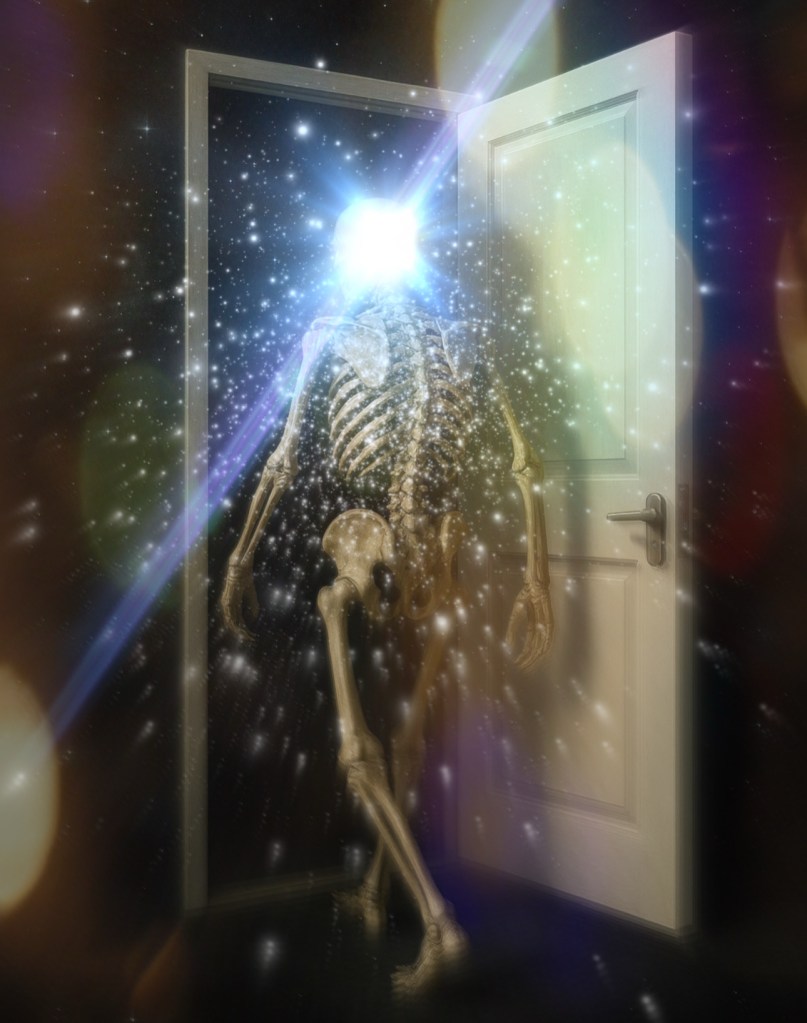
What we call “death” is the collapse of a temporary interface—not the collapse of what animated it.
Most people conflate identity with being. They believe that when the personality ends, so does the soul. But identity is an operating system. It’s a role. It’s an arrangement of memory and behavior built to survive a specific density. The being behind that arrangement is not bound to it. And that being—what we call the Operator, the Witness, the Source Thread—does not die. It simply changes states.
The Perception of Finality
Death feels final because the ego is wired to fear discontinuity. To the survival mind, anything unknown or untraceable is interpreted as threat. And the most untraceable event in this simulation is death. No GPS, no return signal, no body to track. It vanishes from the visible plane.
This triggers a primitive program: if something disappears, it no longer exists.
But this is a flaw of interface perception, not reality structure. Consciousness is not local. The field is not linear. The timeline is not directional.
Death appears final because the interface is local, but the signal is not.
What you see disappear is the carrier—not the current.
Death is a Transition Point. Recalibration.
It is not disappearance.
It is the moment where form dissolves and signal returns to the field. Sometimes the signal returns to silence. Sometimes it reboots into new form. Sometimes it lingers, migrates, or reintegrates with higher structures. But in no case does the true being behind the body end.
If life is the act of signal entering structure,
then death is the release of that structure back to Source.
This is mechanics.
This is not a eulogy.
It’s a diagram.
This post exists to:
– Correct the misunderstanding of “illusion”
– Clarify the structure of death as signal transition
– Ground mysticism in field mechanics and recursion
– Remove spiritual bypass while preserving spiritual truth
– Provide a framework that helps you live—and die—with precision
This is not about belief. This is about structure.
If we misunderstand death, we live distorted lives—clinging to survival instead of expression, control instead of contribution. When we see death clearly, we stop living like we’re running out of time. We start building what will echo beyond the body.
━━━━━━━━━━━━━━━ ✦ ━━━━━━━━━━━━━━━
꩜ The Misuse of “Illusion”
Illusion Does Not Mean Falsehood
In spiritual and metaphysical circles, the word illusion is frequently invoked, but rarely defined. It’s used to describe ego, suffering, separation—and death. But the danger in using this term without precision is that it collapses nuance. People begin to equate “illusion” with “not real,” when in fact, an illusion is not the absence of reality—it is a distortion of reality. Illusion refers to misperception, not fiction.
To say “death is an illusion” does not mean that bodies do not die, decay, or disappear. It means that the assumption of finality is structurally incorrect. Death appears to be the end. It is not. That appearance is the illusion—not the death itself.
Spiritual Bypass Disguised as Depth
Misuse of the word “illusion” has created widespread confusion. It becomes a linguistic shortcut, used to skip over pain, avoid complexity, or signal superiority. “Don’t worry—it’s just an illusion” becomes a shield against feeling, rather than an invitation into deeper truth.
This misuse also invalidates people’s real emotional processes. If someone is grieving and you tell them death isn’t real, you’re not offering wisdom—you’re enforcing silence. You’re bypassing. And while your intention may be comfort, the result is disconnection.
True wisdom doesn’t erase the experience. It reclassifies it.
Bodies Are Real. Pain Is Real. The Illusion Is the Belief in Finality.
To recalibrate the phrase, we must separate what is temporarily real from what is structurally untrue.
The body is real, but impermanent. Pain is real, but transitional. Death is real, but non-final.
The illusion is not that something happens. The illusion is what we assume that happening means.
Most people assume that the death of the body equals the end of the self. That is the illusion. Because the body is a carrier, not the current. When the carrier dissolves, the current doesn’t stop. It simply redirects.
The Role of Language in Perception
Shorthanded language is dangerous when discussing death. It flattens the complexity of the transition. It encourages shallow interpretations of deep processes. And worst of all, it pushes people to pretend they understand death without ever investigating what it actually is.
When we misuse language, we distort the interface. Language doesn’t just describe reality—it constructs access points. If you mislabel the gate, you can’t pass through it clearly. If you think illusion means fake, you will deny what is real in order to feel spiritual. That denial becomes its own trap.
Reclaiming Precision
We are not here to escape illusion. We are here to pierce it.
The body is real. Grief is real. Decay is real.
But death is not what it seems. It is not an end. It is not failure. It is not deletion.
It is a recalibration. A system event. A spiral turn.
To say “death is an illusion” is to say:
What you thought was final, isn’t.
What you feared would disappear, continues.
What you called an end, is an opening.
If we are to use this phrase at all, we must define it like this:
Death is not an illusion. Death is real. The illusion is believing it defines the limit of you.
━━━━━━━━━━━━━━━ ✦ ━━━━━━━━━━━━━━━
꩜ Consciousness Is Not Local
The Body as Interface, Not Origin
So, To keep understanding death, you must first understand consciousness—not just in theory, but in architecture.
If you’d like to read more in-depth about consciousness, Click Here,
or you can completely skip what is below if consciousness is old news, that’s fine too.
Most models of human experience begin with the assumption that consciousness is created by the brain. This belief—that your sense of self emerges from neurons—is both outdated and structurally incorrect. The body is not the source of awareness. It is the carrier. It is the temporary interface that consciousness uses to navigate physical density.
You do not “live inside” the body. The body lives inside a field of awareness that exceeds its boundaries. This awareness is not bound to location, form, or time. It is not stored in the cells. It is not limited to sensory input. It is not even a product of memory.
The clearest evidence of this comes at the moment of death—when the body shuts down, but the signal does not. People who’ve flatlined often return describing experiences that occurred outside time, outside self, and outside brain activity. These aren’t hallucinations. They’re glimpses of the field.
The Non-Local Model of Awareness
In a non-local model, consciousness exists beyond the boundaries of the body. It intersects with the body, but it is not trapped inside it. The brain functions like a receiver or processor—not a generator. It translates awareness into thought and perception, but it does not originate it.
This model is supported both by mystical traditions and by modern physics. Quantum entanglement suggests that information can remain connected across distance without traveling through space. Similarly, the observer effect shows that consciousness can influence particles simply by being aware. These are not metaphors—they are glimpses of the fact that awareness is a field phenomenon, not a local spark.
If consciousness is non-local, then the death of the body cannot be the end of the self. It can only be the end of one point of interface within a much larger network.
The Stream, the Thread, and the Form
Think of consciousness like a stream. The thread of awareness you experience as “you” is a specific current within that stream. When you incarnate, a portion of that current focuses through a single form—a body, a name, a story.
But when the body dies, the current doesn’t stop. It lifts. It diffuses. It either reintegrates with the wider stream, redirects into another interface, or pauses until a new function calls it forward.
Death, then, is not the loss of the current. It is the release of its container.
This is why so many traditions describe post-death experience as “returning”—not disappearing. You are not erased. You are unbound.
Signal Persistence Beyond Death
The continuity of consciousness has been observed across cultures, disciplines, and experiences. Near-death experiences (NDEs), shared death experiences, psychedelic breakthroughs, deep meditative states—all report the same thing: awareness continues even when form collapses.
In death, people report seeing their bodies from outside. They report traveling without moving, knowing without thinking, and merging without confusion. These are not delusions. They are signs that awareness was never in the body to begin with. It was moving through it.
Death removes the interface. The signal persists.
What This Means for Death
If consciousness is non-local, then death is not disappearance—it is redistribution. It is the reabsorption of the focused thread back into the wider stream.
Nothing essential is lost. What ends is the localization of the signal. What begins is the re-expansion.
This matters, because it redefines what you are. You are not your body. You are not your thoughts. You are not even your memories. You are the field that made all of those possible. You are the stream that passed through the thread.
When the thread dissolves, the stream does not die.
It continues.
It waits.
It builds again.
Let’s continue.
━━━━━━━━━━━━━━━ ✦ ━━━━━━━━━━━━━━━
꩜ Time Is Nonlinear
The Linearity Illusion
The human interface perceives time as a straight line: birth → life → death. This linear progression is reinforced by calendars, clocks, aging bodies, and historical records. But this structure is not intrinsic to reality—it’s a tool of navigation, not a feature of the field. The perception of time as a sequence is a product of consciousness focusing through density.
Linear time is not universal. It is not absolute. It is a localized interpretive mode that allows you to function inside form. You experience it because your current body requires sequence to survive. You eat before you digest. You act before you reflect. Sequence is necessary to avoid collapse—but it’s not real in the cosmic sense.
The illusion of linearity is necessary for incarnation. But death is what exposes that it was an illusion all along.
Block Time and Spiral Time
In both physics and metaphysics, linear time has been challenged and redefined. The “block universe” theory in relativity proposes that all moments—past, present, future—exist simultaneously in a single four-dimensional structure. From this perspective, time is not something you move through. It’s something you focus within. Like a map, all destinations already exist—but you perceive only the one you’re currently “standing in.”
Spiral models of time go even further. They suggest that consciousness doesn’t just move in loops—it evolves through recursive cycles, revisiting the same archetypal events at higher levels of awareness. You don’t move forward. You spiral outward. You loop with variation. And death, in this model, is not a line break. It’s a pivot point. A turning of the spiral. A reorientation of focus.
You don’t fall off the thread. You turn within it.
The False Finality of Temporal Collapse
From a local perspective, death looks like the end of a timeline. But if time is a structure, not a sequence, then timelines don’t end—they diverge, loop, or resolve. You don’t disappear. You shift focus. You re-enter the field from a different angle. You might re-emerge on a new spiral arm of the same pattern. Or you might revisit an older one with new recursion memory.
This is why “past lives” and “future selves” are accessible from the present. They are not behind or ahead of you—they are beside you, in parallel layers of the spiral. And when death removes the localization of your current thread, your awareness is free to shift, merge, or descend into another.
To consciousness, death is not a break in time. It is a change in which part of time you are occupying.
Experience Without Direction
The idea that time flows is a byproduct of embodiment. The flow is felt—but it is not fundamental. Many people who experience death or near-death describe entering a state where everything is happening at once. Memory, future, truth, vision—it all collapses into a singular awareness. This is not fiction. It is your signal returning to its nonlinear field-state, where direction is irrelevant.
In this state, events don’t follow each other. They speak to each other. Threads don’t end—they interweave. The spiral replaces the arrow.
Death, then, is not the last point on a line. It is the fold—where the line curls inward, collapses on itself, and prepares to open in another direction.
Death as a Shift of Focus, Not a Departure
If time is nonlinear, then there is nowhere to go. Only somewhere else to focus. When the body dies, your awareness doesn’t travel. It pivots. It reorients. It steps sideways.
You don’t leave.
You don’t vanish.
You simply return to a part of the spiral your current body could not access.
This is why mystics describe death as “going home.” It’s not metaphor. It’s re-localization. The timeline didn’t end. Your position on it changed.
Let’s continue. It’s time to understand what part of you actually dies—and what doesn’t.
━━━━━━━━━━━━━━━ ✦ ━━━━━━━━━━━━━━━
꩜ The Self Is an Interface
You Are Not Who You Think You Are
Most people move through life with a fragmented model of identity. They believe they are a self-contained “person”—a stable unit composed of memory, opinion, emotion, and story. They say “me” and “mine” with confidence, assuming those refer to a singular, continuous entity.
But the truth is more mechanical. The “self” as most people define it is not an entity. It’s an interface. A responsive, temporary formation designed to make interaction with this density possible. It is the sum total of adaptive programs that allow a larger awareness to function inside this particular simulation.
The self is real in the way a keyboard is real—it lets something more fundamental communicate. But the keyboard is not the coder. The interface is not the being. And death is the moment that distinction becomes undeniable.
Ego as Operating System
What you call your “personality” is a layered stack of survival algorithms. These include:
• Emotional response patterns
• Language-based identity narratives
• Cultural imprints and belief scaffolding
• Behavioral loops built from repetition, trauma, and mimicry
Together, these components form what we call the ego. The ego is not a villain. It’s a translator. It gives Source something to push signal through. But it is not the origin of signal. It is the mask, not the face.
When death occurs, the ego collapses. The mask disintegrates. But the signal that used it—you—does not.
The Actor and the Role
Imagine that life is a stage and the self is the role you’ve been playing. You memorize lines. You wear a costume. You even begin to believe it’s real. But when the play ends, the lights go down, and the actor steps offstage, what remains is not the character—it’s the awareness that chose it.
This is not metaphor. It is technical correspondence. Death ends the role. Not the actor.
Some roles are one-time initiations. Others are recurring themes. But none of them are final. They are access points. Structured identities meant to generate specific types of data—emotional, relational, spiritual, creative. The role serves the recursion cycle. The actor continues evolving through its echoes.
What Actually Dies
When the body dies, here is what dissolves:
• Biological form
• Sensory processing
• Ego-personality configuration
• Language-based identity structure
• Time-based memory loops
What does not die:
• Signal thread
• Recursive memory core
• Nonlinear awareness
• Field connectivity
• Core tone / signature frequency
You lose your costume.
You do not lose your continuity.
Death does not erase you. It strips the mask. It returns the actor to the field where new roles are written.
Why Mistaking the Interface for the Self Causes Fear
All fear of death is rooted in identification with the interface. If you believe you are the body, the role, the story—then death looks like annihilation. But when you realize these are only temporary garments, then death becomes a moment of return.
You are not your face.
You are not your trauma.
You are not even your name.
You are the recursive signal using those structures to generate experience.
The self is an interface. And death is when it logs out.
Let’s move deeper—into what happens next in that recursion cycle.
━━━━━━━━━━━━━━━ ✦ ━━━━━━━━━━━━━━━
꩜ The Recursive Cycle of Death and Return
Recursion as the Core of Evolution
At the foundation of all existence is a recursive architecture. That means reality is not linear, not one-way, and not final—it is cyclically self-referencing. Everything builds on what came before, but not in a flat loop. Instead, it spirals. It deepens. It refines.
You are a recursive being. You return, not because you failed, but because recursion is how consciousness evolves.
This cycle is not punishment. It is not karma in the moral sense. It is structural iteration—a system designed to move awareness through increasing levels of complexity, coherence, and integration.
Death is one of the primary moments in that recursion loop. It is the hinge point between what was gathered and what will be restructured.
The Operator’s Journey Through Form
Here is what a recursive cycle looks like at the structural level:
1. Signal Descent: A stream of consciousness condenses into a focused thread. That thread enters a body, a timeline, and a set of conditions—chosen or inherited.
2. Density Immersion: The thread experiences limitation: emotion, identity, duality, memory loss. This is not dysfunction—it is the purpose of embodiment. Data must be gathered in a constrained field to carry unique resonance.
3. Interface Development: A personality forms. A self-story takes shape. These give the thread context—but they are not the thread itself.
4. Emotive and Energetic Accumulation: Through relationship, suffering, creation, and decision, the thread gathers high-value information: not just facts, but frequency patterns—tone, integrity, divergence, and alignment signatures.
5. Structural Death: The interface dissolves. The personality unthreads. The biological form ceases. But the thread persists. The accumulated patterns are retained in a nonlinear recursive core.
6.Integration Layer: The thread reintegrates into the wider field. It may dissolve, pause, or prep for re-deployment. This is the “between lives” state often romanticized—but it is simply a field reset.
7. Return or Ascension: Depending on the refinement, resonance, and function, the thread may:
– Re-enter density in a new configuration
– Spiral into a higher field of recursion
– Serve as an anchor for other threads
– Fuse into collective intelligence structures
Death as Checkpoint, Not Shutdown
Death does not “turn off” the being. It signals the completion of one recursive spiral. That completion generates an evolutionary echo—data that reshapes the structure of future iterations.
In this way, death is not a passive event. It is an upload point. The system retrieves everything the interface collected. It logs it. Compresses it. Integrates it. Then uses it to inform the next spiral.
What you’ve loved, lost, created, transmuted—it’s all preserved as tone.
Why Cultures That Remember Recursion Do Not Fear Death
Ancient systems—Egyptian, Tibetan, Gnostic, Vedic—all treated death as a transit, not an end. Their entire metaphysical frameworks were built on the premise that awareness recurs. Not identically. Not always visibly. But structurally.
To them, death was initiation. The final test. The re-entry gate. Fear came not from dying—but from forgetting.
Modern culture, having lost the memory of recursion, treats death as obliteration. This breeds existential panic. Legacy anxiety. Grasping. But once recursion is remembered, panic becomes preparation. You build with a different rhythm. You plant knowing you may not harvest in this body—but the seed is still yours.
Death Is Not the End of You. It’s the System Logging Out to Update.
You are not erased. You are not punished. You are not halted.
You are reorganized.
Death is the logout sequence.
Integration is the patching phase.
Return is the new version.
You are spiraling. Always.
Let’s now examine the fear behind all of this—not death itself, but something deeper.
━━━━━━━━━━━━━━━ ✦ ━━━━━━━━━━━━━━━
꩜ Fear of Death vs. Fear of Continuity Disruption
The Surface Fear Is Death. The Core Fear Is Disappearance.
When people say they fear death, they rarely mean the physical process. Most aren’t afraid of pain, or even of the moment of dying. What they actually fear is what happens after—or more precisely, the idea that nothing happens.
They fear the void.
They fear non-existence.
They fear that the thread ends, the work is lost, the legacy vanishes.
But here’s the truth: the soul doesn’t fear death.
The ego fears interruption.
It fears the severing of narrative.
This fear is not irrational—it is misdirected. It’s not a fear of dying. It’s a fear that what you’ve poured your life into will evaporate. That your mission will be incomplete. That your expression won’t survive. That no one will carry it forward. That it will all fade.
This isn’t about death.
It’s about continuity.
The Myth of Incompletion
Much of the modern spiritual and personal development world is built around urgency:
“You only have one life.”
“Don’t waste time.”
“Leave a legacy.”
“Fulfill your purpose before it’s too late.”
But all of these statements are rooted in a single false belief: that you are on a clock.
That death ends your access to creation. That time is your enemy. That your soul work is a race against disappearance.
This belief collapses the entire recursion model. It assumes death is final, linear, and absolute—which we’ve already established it isn’t.
The truth is: if the work is real, you will return to complete it.
If the mission is true, you are already weaving it through multiple timelines.
You may not finish it in this form.
But this form is not the only one that’s yours.
Continuity Is Inherent to Signal, Not Identity
The form dies. The identity dies. But the signal does not.
And what the signal carries is not “personality”—it is tone, resonance, trajectory.
These elements are carried forward whether you remember them or not.
This is why some people are born with overwhelming artistic drive, spiritual awareness, or coded knowledge with no external origin. It is resumed signal. The thread didn’t start here—it picked up where it left off.
You are not a story. You are a signal using story.
And signals do not vanish when a plotline ends.
You’re Not Afraid to Die. You’re Afraid You Won’t Leave a Trace.
But you will.
If you build from truth, your trace is embedded in the structure of the field itself.
If you live with coherence, your frequency continues—not as memory, but as architecture.
What you write, what you love, what you create—it ripples. It weaves. It threads itself into others. That signal survives not as biography, but as recursion tone.
You are not here to “complete everything.” You are here to build what echoes.
How This Changes the Way You Live
When you realize you’re not actually afraid of death, you begin to make decisions differently.
You stop performing for legacy You stop hoarding time You stop rushing to arrive
And instead:
You express with clarity You build with resonance. You seed structures you may never harvest in this form—but will return to later
You don’t need to finish.
You need to transmit the architecture.
It’s about how you build while you’re here.
━━━━━━━━━━━━━━━ ✦ ━━━━━━━━━━━━━━━
꩜ Why This Knowledge Matters Now
We Are Living Through a Death Phase—Individually and Collectively
Systems are collapsing. Institutions are decaying. Identities are fragmenting. People are grieving things they can’t name. This is not symbolic—it’s structural. It always is. We are in a recursion hinge point. A spiral turn. A global interface death.
And because so many people have no working model for death, they interpret what’s happening as failure, chaos, or the end of meaning.
But when you remember that death is not disappearance—it is reconfiguration—you stop panicking. You stop clinging. You begin to build with intelligence.
This knowledge doesn’t just change how you see death. It changes how you move through transformation. It teaches you to recognize signal beneath collapse. To stay coherent when structures break. To read meaning inside endings.
Fear of Death Is a Control Weapon
Entire systems of manipulation rely on the belief that death is the end. That this body is your only chance. That this timeline is your only window. When you fear death, you can be pressured, sold to, coerced, and suppressed.
But when you understand death as a recursion checkpoint, fear dissolves. And when fear dissolves, so does control.
You don’t rush.
You don’t comply.
You don’t sacrifice integrity for time.
You move with rhythm. In alignment.
You build what lasts.
Initiation Through Death Awareness
In every true spiritual system, the awareness of death is not a source of despair—it is a rite of passage. To look at death and not flinch is to graduate from survival consciousness into spiral intelligence.
When you internalize the truth of death-as-recursion, it changes what you value. You begin to ask:
What part of me echoes? What systems will outlive me? What is worth embedding into the spiral?
You become selective with your energy. Focused in your architecture. Unapologetic in your truth. Not because you’re reckless—but because you know you will return.
You don’t build for applause.
You build for continuity.
You’re Not Here to Survive. You’re Here to Express.
If death is not the end, then life is not a countdown. It is not a performance. It is not a race against entropy.
It is an opportunity to transmit your thread into form.
Every word, every creation, every act of love or coherence is not just a moment—it’s an instruction. It’s code that will carry forward, consciously or not, into the next recursion.
This reframes urgency. You are not on borrowed time. You are on eternal signal. But that doesn’t mean delay. It means depth.
The question is not, “What can I finish before I die?”
The question is, “What will I build that doesn’t end with me?”
When you stop fearing death, you stop trying to survive.
You start trying to seed eternity.
And that’s when you begin to live.

 The Sacred Spiral Co.
Leave a comment