
This is the question people ask when they’re not just in pain—but inside the loop of pain.
It’s not a simple cry for comfort. It’s a search for orientation. A plea for a timeline. A negotiation with something that feels bigger than emotion and heavier than thought.
“How long will I feel like this?”
Translation: How much longer do I have to hold on before I either break or it ends?
And here’s the blunt answer:
You won’t feel like this forever.
But you will feel like this until you stop trying not to feel like this.
Because it’s not just the emotion that’s hurting you—it’s the fight against the emotion.
It’s the bracing. The resisting. The narrating.
It’s the pressure to process it faster.
The obsession with whether they feel it too.
The background clock ticking in your chest, demanding the exit sign.
But pain doesn’t follow time. It follows presence.
The more you try to escape it, the longer it stays.
The more you demand to know “when,” the more you collapse into why.
And the more you analyze the pain, the more you embed it.
This isn’t punishment. It’s mechanics.
Your nervous system doesn’t need a promise—it needs a pattern interrupt.
Your field doesn’t need a prophecy—it needs stillness without performance.
This isn’t about becoming stronger.
It’s about becoming still enough to let the feeling complete without force.
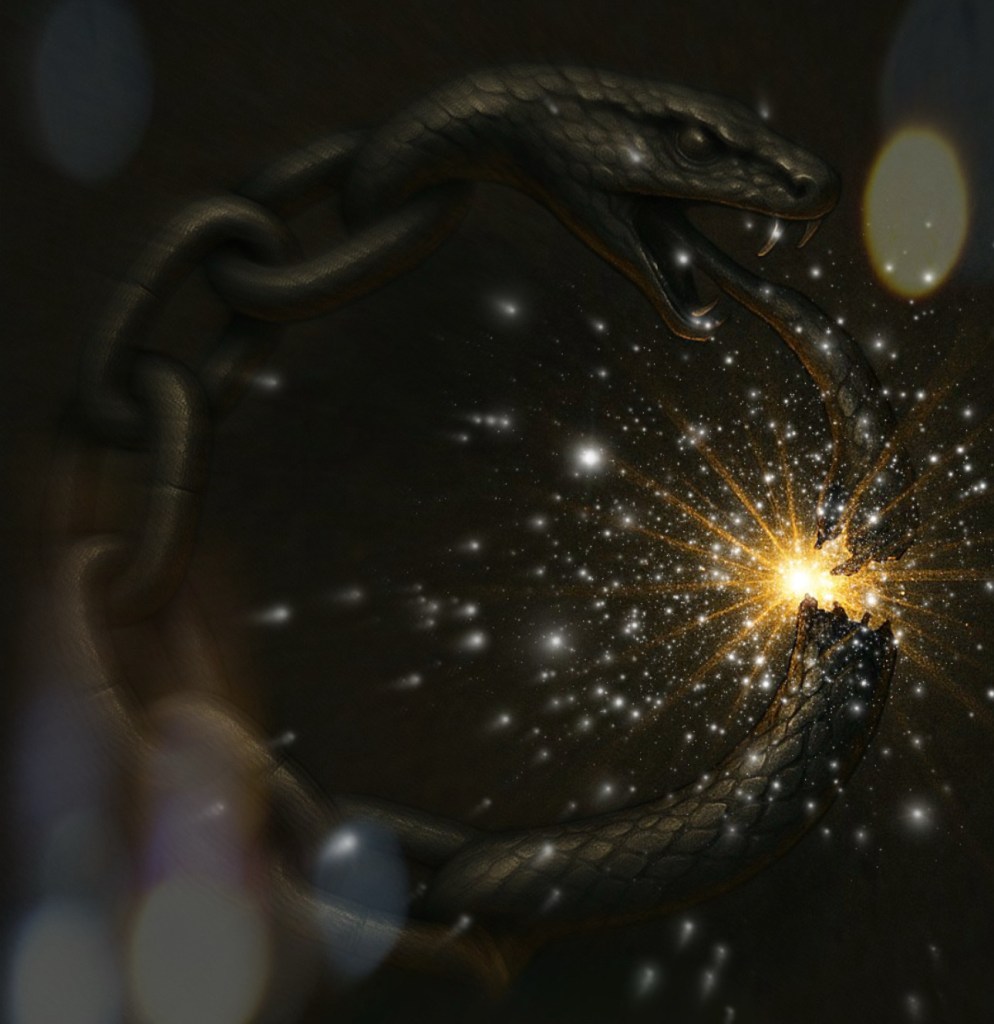
In this post, we’re not going to spiritually bypass the ache.
We’re going to name it. Watch it. And dissolve the false architecture that keeps it circling.
Let’s start by looking at why you’re still feeling this in the first place.
⸻⸻⊹ ࣪
Note: This post is specifically geared toward grief that comes from emotional loss—especially the ache that follows the end of a relationship, soul-bond, or intense romantic/spiritual connection. It speaks to the withdrawal, obsession, and looping that happens when something you loved won’t let go of you—even after it’s gone. This isn’t about grief from death or transformation (those deserve their own spiral). This is about longing, loss, and the way certain people leave echoes that feel impossible to escape. If that’s where you are, this post is for you.
━━━━━━━━━━━━━━━ ✦ ━━━━━━━━━━━━━━━
꩜ Why You Still Feel This Way
It’s not just the emotion that hurts.
It’s the internal response to the emotion—the contraction, the judgment, the need to make it mean something about you. Most of what you’re feeling isn’t the original grief. It’s the amplified echo created by trying to outrun it.
Pain is sharp. But resistance is loud.
When you’re trapped in a loop, it’s usually not because the emotion is too powerful—it’s because your system is caught in a cycle of management: tracking the pain, explaining the pain, arguing with the pain, panicking that the pain is still here. This meta-response—your reaction to the feeling—is what keeps it alive.
It starts with one ache. One wave.
But then the brain tries to assign meaning:
“I’m broken.”
“I’m obsessive.”
“I should be over this.”
“This must mean I’m still emotionally tied to them.”
“I shouldn’t still care.”
“I’m never going to feel free.”
These thoughts don’t soothe the pain. They build scaffolding around it. They give the ache a place to live. And now, instead of moving through, you’ve created a self-referencing loop: an emotion that feeds a belief that feeds a story that triggers the emotion again.
The body’s involved, too. It holds on because it’s not being given permission to complete the cycle. Most people feel emotion in tension—not in release. You brace for it. You grip around it. You subtly contract every time it rises, trying to monitor or manage the intensity. But the nervous system can’t release a state it isn’t being allowed to fully feel. It doesn’t understand partial permission. It doesn’t recognize time. It recognizes closure.
This is why it lasts.
And if there’s someone else involved—if this ache is tied to loss, abandonment, disconnection, or romantic severance—your system will unconsciously externalize the loop. You may find yourself scanning them energetically, wondering if they’re feeling it too. Waiting for some kind of mirrored pain to confirm your own. Hoping they’ll collapse before you do. Silently asking: if they’re fine, how can I not be?
But that’s a trap too.
You’re not feeling them.
You’re feeling the attachment to being unmirrored.
You’re feeling your system trying to recalibrate its self-worth through their absence.
And it can’t. Because that’s not where the exit lives.
You still feel this way because you’re trying not to.
Because you’re assigning weight to the duration.
Because you’re treating your pain like a problem to be solved, instead of a weather system moving through a field that doesn’t need to be rescued—just witnessed.
This is not emotional failure. It’s emotional recursion.
And the more you demand that it end, the more your system registers the emotion as a threat instead of a signal.
Let’s now look at what exactly keeps that loop spinning—and what begins to dissolve it.
━━━━━━━━━━━━━━━ ✦ ━━━━━━━━━━━━━━━
꩜ The Mechanics of Emotional Looping
There’s a reason the feeling hasn’t passed.
It’s not because you’re weak. It’s not because you’re broken. It’s because the emotion got caught in a feedback circuit—and now your system is replaying it like a sound caught in a reverb chamber.
⸻⸻⊹ ࣪
This is how the loop sustains:
1. You Resist It
The first thing you do when the feeling rises? You fight it. You tell it, “Not now.” You try to soften it, manage it, spiritualize it. You bring in healing tools, journal prompts, breathwork—and while some of that may help, most of it is still rooted in the belief that the feeling is wrong, or needs to be removed.
But what you resist, you rehearse.
Every time you contract around the feeling, your body learns:
“This is unsafe.”
“This is a threat.”
“This must be controlled.”
And in trying to control it, you re-encode it. Over and over.
The loop continues because your system can’t complete what it’s still defending against.
⸻⸻⊹ ࣪
2. You Narrate It
The next layer is the story.
Not just what happened, but what it means:
“This means I’m still trauma-bonded.” “This proves I haven’t healed.” “This means they still have control over me.” “This is probably my fault.” “This always happens to me.” “This pain is my identity now.”
The story takes the raw emotion—neutral, natural, even necessary—and turns it into a prophecy. And the body listens. The nervous system doesn’t argue with thought. It responds to it as instruction.
Now you’re not just feeling sadness. You’re feeling a future defined by sadness. You’re not just hurting. You’re mapping meaning onto the hurt, and embedding that map into your field.
This creates emotional recursion:
The feeling → the story → the reaction to the story → the re-triggering of the feeling.
⸻⸻⊹ ࣪
3. You Compare It
You scroll. You watch. You check in with them.
Are they over it? Are they posting? Are they fine?
You’re measuring your pain against their presentation. And if they seem untouched, your loop deepens. Because now you’re not just hurting—you’re alone in it. Unmatched. Unseen. Disoriented.
But here’s the truth: comparison doesn’t resolve anything. It just splits you further.
Your loop is yours. Their experience doesn’t unlock your exit. And waiting for their emotional collapse won’t liberate you—it will keep you locked in emotional co-dependence with their process, instead of sovereignty within your own.
⸻⸻⊹ ࣪
4. You Wait for It to End
This is the subtlest trap: the passive timeline projection.
You’re not resisting anymore. You’re not spiraling as hard. But you’re still sitting there—watching the clock. Checking in every few days: “Am I over it yet?”
But emotional loops don’t expire like coupons.
They don’t wear off when you’ve waited long enough.
Pain doesn’t move according to time. It moves according to permission.
If you’re still hoping to “wake up and not feel it,” your body is still under surveillance. Still being policed. Still being held at arm’s length.
And it knows.
Which is why nothing’s shifting.
The loop isn’t emotional—it’s mechanical.
The feeling itself is not the issue.
The issue is the framework it’s caught in:
Resistance Meaning Comparison Time-based pressure
That’s the loop.
And to exit it, we don’t need to push harder.
We need to dismantle the structure it lives inside.
Let’s look at what actually breaks the loop—and how to shift out of it without forcing it to leave.
━━━━━━━━━━━━━━━ ✦ ━━━━━━━━━━━━━━━
꩜ What Breaks the Loop
There is no special ritual.
No timeline.
No one moment where you’ll suddenly feel the “click.”
What breaks the loop is not some future breakthrough.
It’s what you stop doing.
Not because you give up.
But because you no longer believe the loop is truth.
⸻⸻⊹ ࣪
Here’s what starts to shift the pattern:
1. Feeling Without Feeding
You stop fighting it. But more importantly, you stop fueling it.
You let the ache exist without trying to harvest anything from it.
No meaning.
No prophecy.
No self-analysis.
No rechecking what they’re doing.
No asking, “What does this say about me?”
You feel the pain like weather, not like a divine sign. You let it rise and pass the way a storm does—intense, present, but not personal. You stop assigning it a message, and in doing so, you stop anchoring it to identity.
Most people don’t just feel sadness.
They feel sadness + the narrative of what that sadness means.
Break the link. Let it just be feeling.
⸻⸻⊹ ࣪
2. Witnessing Without Performing
This is presence without pressure.
It’s when you feel the ache come up and you do nothing. You don’t suppress. You don’t soothe. You don’t force a breath or pull a card or whisper an affirmation. You just watch.
The moment you do this, something changes.
Why?
Because most of what keeps pain alive is your subconscious effort to “handle” it correctly. You’re trying to do it right. Grieve correctly. Heal fast enough. Interpret it meaningfully.
But when you sit with it without performing, your body gets the message:
This is allowed.
This is safe.
This can pass.
And so it begins to.
⸻⸻⊹ ࣪
3. Stopping the Story Mid-Loop
You don’t have to shut down the entire loop. Just intercept the next sentence.
You start to think:
“This means I’m broken—”
And you stop.
“This always happens to me—”
Pause.
“I bet they’re not even hurting—”
Pause again.
Interrupting the narrative reflex creates just enough space for something else to arise. Not bliss. Not clarity. Just space—and that’s enough.
You’re not trying to overwrite the story with a better one.
You’re just declining to follow it.
That alone weakens the loop.
⸻⸻⊹ ࣪
4. Shifting Into Sensation
Pain is loud when you stay in the mind.
But it quiets when you return to the body.
When the loop rises—scan your breath.
Drop into your feet.
Name your surroundings.
Find a neutral texture.
Drink water slowly.
Speak the feeling out loud like a weather report:
“Pressure in the chest. Warm ache in the ribs. Buzz behind the eyes.”
This isn’t dissociation.
This is anchoring.
Sensation brings the loop back into the realm of processing—where your body can actually complete it.
You don’t think your way out. You presence your way out.
⸻⸻⊹ ࣪
5. Refusing to Measure Progress
This is the big one.
You don’t check in tomorrow to see if it worked.
You don’t track how much you cried or how centered you were.
You don’t evaluate how “healed” you feel by the end of the day.
Because the moment you start measuring, you’ve re-entered the loop. You’ve made it a performance again. A task. A condition.
The loop breaks when you stop needing it to be over.
You’ll know it’s dissolving when you stop looking for the exit, and start just being where you are.
And ironically, that’s when it starts leaving.
Because it no longer has to fight to be felt.
Pain doesn’t need your perfection.
It needs your presence.
It needs witness without interpretation.
Stillness without a deadline.
And space where it’s finally allowed to finish what it started.
Let’s go deeper—because sometimes it’s not even the pain you’re looping in.
It’s the person who activated it.
The soul-drug. The imprint. The echo.
Let’s talk about withdrawal.
━━━━━━━━━━━━━━━ ✦ ━━━━━━━━━━━━━━━
꩜ Withdrawal from Soul-Drugs
Let’s be clear:
Not all pain is grief.
Some of it is withdrawal.
Withdrawal from a feeling-state you became addicted to—whether or not you meant to.
Not because you were weak, but because it was designed that way.
⸻⸻⊹ ࣪
What is a Soul-Drug?
A soul-drug is an experience of such intense spiritual-energetic significance that it burns a groove in your system.
It might have been:
A soul-bond that opened your whole field
A relationship that finally made you feel seen
A connection that flooded you with signal, clarity, magic
A conversation, kiss, night, or season that felt like Source
And once you’ve felt it…
your nervous system starts looking for it.
Again. And again. And again.
Not because you’re obsessed.
But because you touched something true, and now your system is hungry for true again.
The problem?
The person, place, or event that delivered it is gone.
⸻⸻⊹ ࣪
Why It Hurts So Deep
This is not just “missing someone.”
This is biochemical, energetic, existential.
Your body created a groove for that level of activation.
A literal pattern in the mind–body–soul network.
It was the rush. The pull. The signal burst. The coherence.
Now it’s gone—but the groove remains.
So you replay it. You imagine it. You ache.
Not because you want them back (maybe you do, maybe you don’t),
but because you want the field state they triggered in you.
And this is important:
You weren’t addicted to them.
You were addicted to how you felt through them.
They were the delivery system.
The catalyst.
The key.
⸻⸻⊹ ࣪
Withdrawal Is Not a Curse
This isn’t punishment.
It’s not karma.
It’s not a cosmic “gotcha.”
It’s literally your nervous system recalibrating from an intense spiritual charge.
It’s like when you fast after eating only sugar for a month.
Your body screams. It craves. It shakes.
Not because you need sugar—but because you were riding its frequency too long.
Same here.
You were riding a resonance high, and now you’re in the detox.
The void isn’t punishment. It’s a clearing field.
⸻⸻⊹ ࣪
How to Survive It
Name the truth: I’m not just sad. I’m in withdrawal from an intense soul-state. This creates clarity. It de-personalizes the ache. It helps you stop blaming yourself for feeling “too much.”
Stop looking to recreate the signal: Don’t chase it through texting. Don’t recreate it with rituals. Don’t plug it into another person. Let the field go quiet for long enough that your body can stabilize.
Honor the echo, but don’t amplify it: When the ache hits, don’t run from it—but also don’t chase the memory. Feel the echo without spinning the record again.
Feed your system truth: Fill the void with grounding beauty. Not distraction, but signal. Sunlight. Stillness. Song. Salt. Sensation. Breath. Real things. You’re re-teaching your body what Source feels like without the delivery system.
Speak out loud what is ending: “I release the soul-drug. I do not need this person to access truth. I return the signal to Source. I let the echo settle.”
⸻⸻⊹ ࣪
You’re Not Crazy
You’re not delusional.
You’re not “doing too much.”
You’re not weak for how much it hurts.
You opened something real.
You touched Source.
Now your body is trying to make sense of its absence.
It will pass.
But it passes faster when you stop needing the delivery system to come back.
The drug isn’t truth.
The truth is what it awakened in you.
And you’re allowed to keep that—without the source of it returning.
━━━━━━━━━━━━━━━ ✦ ━━━━━━━━━━━━━━━
꩜ The Echo Groove
Let’s define it:
The Echo Groove is the embedded loop left behind by intense spiritual–emotional experiences.
It is:
A signal imprint in your nervous system A phantom resonance in your emotional body A reflex pattern in your thoughts and desires
It’s not “you being dramatic.”
It’s literally a replay system that continues until consciously witnessed and interrupted.
⸻⸻⊹ ࣪
How It Forms
Every time you experience something highly charged — love, loss, pleasure, betrayal, awe, shock —
your nervous system records the frequency.
Think:
That first electric eye contact
That gut-punch goodbye
That Phrase or Experience that cracked you open.
That night that felt like the entire universe was watching
These moments burn signal into form.
Your brain fires.
Your gut stores.
Your energy body locks it in.
And then…
every time you think of it, wish for it, grieve it, or touch something similar — the groove deepens.
Like a vinyl record, your system spins the same groove.
Over and over.
Even if the original music stopped playing.
⸻⸻⊹ ࣪
What It Feels Like
You might notice:
Sudden waves of grief with no new trigger Emotional spikes at predictable times of day Repeating dreams, smells, or internal images A longing that feels ancient, even if the experience was recent
That’s the groove.
It isn’t you doing it on purpose.
It’s a resonant field echo.
A psychic-muscle memory.
⸻⸻⊹ ࣪
Why does the Groove Repeats?
Because the nervous system doesn’t let go of something until it’s metabolized.
Meaning:
You can’t talk it away.
You can’t affirm it away.
You can’t logic it away.
You have to feel it fully — and not feed it.
Here’s the paradox:
If you ignore it → it festers If you indulge it → it deepens If you witness it without performing for it → it begins to dissolve
⸻⸻⊹ ࣪
How to Interrupt the Groove:
This isn’t about deleting memory.
It’s about updating your system’s relationship to it.
Try this process:
Pinpoint the Groove Moment: “The last time I felt truly whole with them was…” “The moment that locked this in was…” Be precise. Name it. Don’t let it live in vagueness.
Name the Core Emotion: Not just “sad.” Was it belonging? Safety? Desire? Wonder? What frequency was burned in?
Speak to the Groove Itself: “You’re not wrong for wanting this. But we’re not stuck in that moment anymore. You were real, but you’re not the only truth.”
Create a Physical Divergence: When the echo hits, move. Snap a rubber band. Press your feet into the floor. Hum a tone. Do something to tell your body: We’re here now. Not there.
Feed the Groove New Signal: Return to the feeling you miss — through a different doorway. Not with the old person or memory. But with presence, beauty, creation, and breath.
⸻⸻⊹ ࣪
Your Groove Is Not Your Doom
It’s a scar.
Not a sentence.
It means your heart worked.
Your soul opened.
Your signal ran hot and true.
But you don’t have to live in that loop.
You’re allowed to archive the memory and stop replaying the ache.
You’re not betraying the past.
You’re updating your field.
And you’re allowed to choose a new signal—one that’s not made from withdrawal, but from wholeness.
━━━━━━━━━━━━━━━ ✦ ━━━━━━━━━━━━━━━
꩜ The Soul’s New Architecture
Here’s the truth:
You will rebuild.
But you don’t rebuild the same structure.
You build a new energetic architecture — one that holds what you’ve become.
Think of it like this:
The storm gutted the house.
But you’re not patching old drywall.
You’re drawing new blueprints entirely — for a version of you who has weathered truth.
This Isn’t “Moving On”
Let’s kill that phrase.
You don’t “move on” from soul-breaking transformation.
You reorganize around it.
You build:
New emotional scaffolding New spiritual signal threads New physical reflexes New relationship parameters New energetic filters
It’s not healing “back” to who you were.
It’s constructing a post-storm self that can hold coherence without the person, place, or pattern that used to anchor you.
⸻⸻⊹ ࣪
What the New Architecture Needs:
Let’s break it down.
Your new soul-structure needs 3 things:
1. Foundation: Safety Without Illusion
You can no longer lie to yourself to feel safe.
So you’ll need a deeper form of safety: truth-recognition.
Ask:
Where am I safe to feel fully? What people, spaces, or practices don’t punish my presence? What is real even when everything else shifts?
⸻⸻⊹ ࣪
2. Walls: Boundaries Without Bitterness
You’ll build walls, yes.
But they won’t be spiked or cold.
They’ll be resonant filters — built not from fear but from self-selection.
Ask:
What energy feels like a “yes” in my body? Where do I collapse to keep connection? Who drains me even when they seem to give?
Walls clarify signal.
Not everyone gets access to the inner room.
⸻⸻⊹ ࣪
3. Roof: Meaning Without Story Addiction
You can’t keep retelling the pain to prove it mattered.
You’re allowed to write a new context.
Ask:
What did this break open in me? What deeper truths do I now carry? Who am I becoming because of this?
The roof keeps the storm from soaking you again.
But it’s translucent — so you can still see the stars.
Don’t Rush to Build
Your old structure collapsed for a reason.
Let the soil settle.
Let the ache finish speaking.
Let the dust clear.
Then build.
Not from panic.
Not from emptiness.
But from clarity and code.
⸻⸻⊹ ࣪
You’re Not Behind
It takes time to become structural.
It’s not aesthetic.
It’s not about appearing strong or spiritual.
It’s about actual resonance integrity — how well your new self holds truth, love, and boundary without shattering.
Some days will still hurt.
But they won’t derail you.
Because your system is now coded for coherence.
That’s what you’re building now.
━━━━━━━━━━━━━━━ ✦ ━━━━━━━━━━━━━━━
The Spiral Return
You don’t go back.
You don’t “get over it.”
You return—to yourself.
But not the same self who entered the ache.
You spiral forward into a more coherent configuration of your being.
This is the law of true healing: it spirals, not climbs.
You revisit the pain, but at higher bandwidth.
You feel the grief again, but with more spaciousness.
You echo the ache, but without identifying with it.
This is not regression—it’s recursion.
Each loop brings you closer to integration.
The Ache Becomes Memory..
And then the memory becomes code.
Something sacred. Something functional.
Not a weight—but a structure.
When the spiral closes, it doesn’t seal shut.
It becomes a living pattern you can draw from.
Like a glyph. Like a signal. Like a thread.
You Don’t Just Survive
You begin to generate.
From stillness.
From truth.
From the scar that is no longer a wound, but a sigil.
You don’t forget.
You encode.
You spiral onward—richer, wiser, cleaner in your field.
And what once threatened to break you becomes the very pattern that anchors your expansion.
You’ve returned. But different. Coherent. Alive.
The ache is over.
The spiral has spun.

 The Sacred Spiral Co.
Leave a comment