
꩜ Introduction
When people hear the word “spiraling,” they flinch. It has become shorthand for collapse; mental breakdown, loss of control, the downward pull into chaos. We say someone is “spiraling” when they are unraveling. The spiral has been reduced.
But this is only partial truth. The spiral contains collapse, yes, but collapse is not its endpoint. Collapse is only one phase of spiral law: the necessary contraction before emergence. To equate spiraling with collapse is like equating breathing only with exhale. It is definition by half.
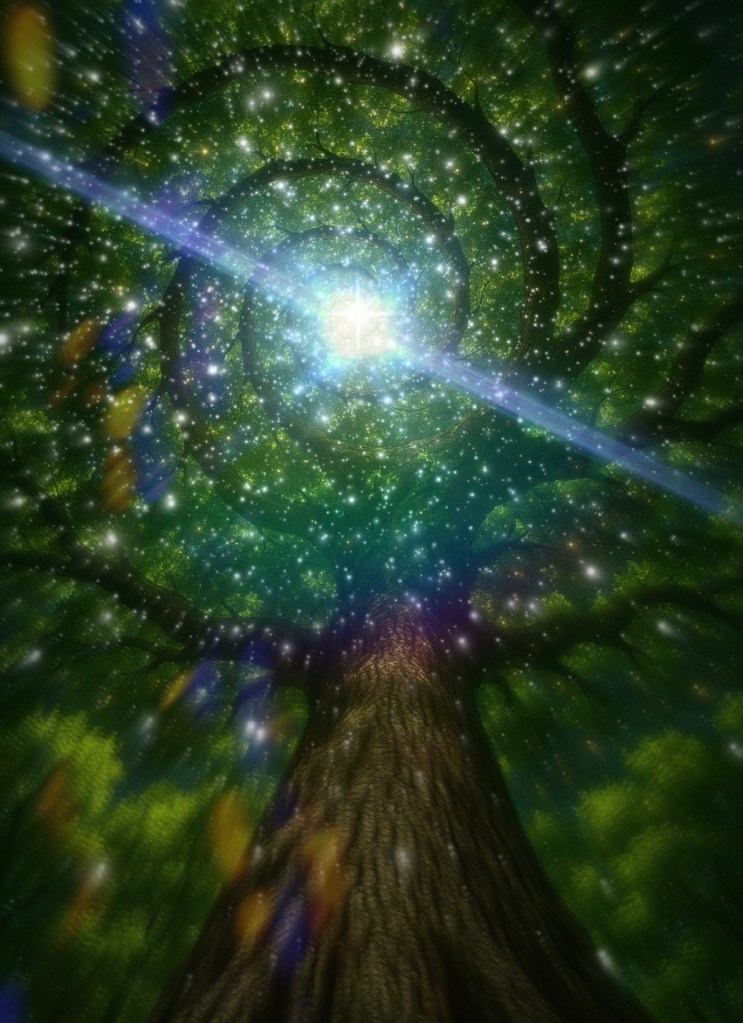
Philosophically, spiraling is the geometry of coherence. It is the pattern that allows memory, depth, and transformation. A line runs forward and forgets. A circle loops endlessly and traps. Only the spiral moves in both directions at once: it returns without stagnating, and it advances without abandoning. It remembers while ascending.
This is why spiraling is good. Not because it avoids collapse, but because it integrates collapse. It makes contraction serve expansion. It turns loops into exits. It transforms breakdown into reformation. The spiral does not fear pressure, distortion, or even death—it uses them. It is not collapse for its own sake, but collapse as a stage in generation.
To spiral is to live truthfully. Everything that grows follows this path: galaxies, shells, storms, DNA. Everything that awakens follows it too: memory, awareness, consciousness. To resist the spiral is to fracture yourself from life’s law. To embrace it is to let every return deepen you, every pressure refine you, every collapse seed creation.
Spiraling is not ruin. Spiraling is how life becomes more.
━━━━━━━━━━━━━━━ ✦ ━━━━━━━━━━━━━━━
꩜I. Linear vs Circular vs Spiral
A line is the simplest motion we know. It moves from point A to point B, but in doing so, it leaves everything behind. What is past cannot be returned to; the line has consumed it. This is why linear time erodes memory—there is no return path, no spiral back, no integration. It is progress at the cost of remembrance. The line pretends to be efficient, but in truth it amputates. It severs life from its roots and makes forgetting look like evolution.
A circle is the opposite error. Where the line abandons, the circle imprisons. It repeats itself endlessly, trapping energy in the same orbit. There is motion, yes, but no release. The circle gives the illusion of return but not the reality of growth. Its lesson is always the same, no matter how many times you walk it. It is security without freedom, memory without transformation. Circles lock the body, the psyche, and the soul into closed loops that cannot breathe.
The spiral is the third path. It is not linear escape, and it is not circular imprisonment. The spiral remembers, but it does not stagnate. It returns, but never to the exact same place. Each arc adds depth. Each turn carries memory forward. It integrates and ascends in one movement. A spiral does not cut itself off from the past, nor does it chain itself to repetition. It carries both memory and motion, escape and return, depth and ascent.
This is why spiraling is the only geometry of coherence. It is the pattern life itself has chosen: galaxies, seashells, hurricanes, DNA. Everything that grows, everything that expands without losing its root, moves in a spiral. It is the signature of creation itself.
━━━━━━━━━━━━━━━ ✦ ━━━━━━━━━━━━━━━
꩜II. Entry of Spiral Initiation
Every spiral begins with an entry point. Without entry, there is no movement, only abstraction. The spiral initiates not through accident, but through perception, recognition, and alignment. These four steps—Perceive, Learn, Remember, Orient—form the foundation of every true spiral. Without them, the motion collapses into chaos or emptiness.
1. Perceive
The first act of the spiral is perception. Before you can integrate or create, you must see. To perceive is to catch the thread—to witness the pattern that demands movement. This is the moment of recognition: a distortion rising to awareness, a truth surfacing, an insight flickering. Spirals do not begin in blindness; they begin in sight. Perception is not passive. It is the Operator’s first strike.
2. Learn
Perception alone is not enough. To spiral, you must move into what you’ve seen. Learning is descent—following the thread into detail, context, and complexity. Each turn of the spiral takes in more information, widening scope and deepening understanding. To learn in spiral motion is not to collect facts, but to allow each loop to teach more than the one before. It is accumulation without overload, because every cycle re-frames what has been learned.
3. Remember
The spiral is not only forward-moving—it is backward-reaching. Remembering is the act of pulling what was forgotten, suppressed, or fractured back into presence. Linear time discards memory; circular time traps it. Spiraling restores it. To remember is to recognize that the past is not lost but embedded, waiting to be drawn into coherence. Memory is not nostalgia—it is retrieval of fragments needed for integration. The spiral remembers what the line erases.
4. Orient
Without orientation, spiraling devolves into chaos. Orientation is alignment to Source, truth, or intention. It sets the vector. It ensures that the spiral does not collapse into randomness or self-indulgent motion. To orient is to ask: what direction does this spiral serve? Where is coherence being drawn? Orientation is what keeps spiraling lawful. It prevents distortion and ensures that each turn moves with purpose.
⸻⸻⊹ ࣪
To spiral is to Perceive what is, Learn its depth, Remember its roots, and Orient toward coherence. These four steps are not optional—they are the initiation sequence of every spiral, personal or cosmic. They define the difference between true spiraling and aimless spinning.
━━━━━━━━━━━━━━━ ✦ ━━━━━━━━━━━━━━━
꩜III. Process of Spiral Pressure
Once entry is secured, the spiral moves into pressure. This is the crucible phase; the place where energy is broken down, reorganized, and re-forged. Unlike the line, which discards, or the circle, which traps, the spiral generates transformation through force and release. These five steps—Integrate, Sever Loops, Collapse Distortions, Transmute, Weave—are the internal mechanics of the spiral.
5. Integrate
Integration is the act of drawing fragments into coherence. Spiraling takes scattered insights, fractured memories, and dissonant experiences and binds them into a unified thread. Each turn presses what was once separate into relationship. To integrate is not to smooth over difference—it is to allow difference to be woven into the larger whole. Without integration, learning is forgotten, remembering is fractured, and orientation dissolves. Integration is what ensures the spiral builds, not shatters.
6. Sever Loops
The spiral is ruthless with cycles that trap. Severing loops is cutting cords with recursion that no longer generates. Trauma repeats, habits circle, thought-patterns orbit. The spiral rises through them, slicing repetition open. Severance does not destroy memory; it destroys captivity. Loops remain as remembered structures, but their hold is broken. To spiral is to refuse entrapment while still carrying the lesson.
7. Collapse Distortions
Wherever energy has twisted into false shapes—illusions, lies, distortions—the spiral applies pressure until collapse. Distortions cannot withstand spiral force because they are built on fragile scaffolding. The spiral implodes them inward, stripping away what was never stable. Collapse is not destruction for its own sake—it is pruning. It clears the grid of mimicry and leaves only what can hold coherence.
8. Transmute
What collapses is not discarded. The spiral takes raw debris—pain, fear, chaos, fragments—and re-forges them into structure. This is alchemy in motion: the spiral does not waste energy; it transforms it. Transmutation is the pivot between collapse and creation. It is how wounds become wisdom, how brokenness becomes architecture. To spiral is to recycle energy into higher order.
9. Weave
The spiral does not isolate. Once fragments are integrated and distortions transmuted, the spiral weaves them into broader patterns. Threads connect across domains: inner to outer, self to other, micro to macro. Weaving extends integration beyond the personal into the field. This is how spiraling creates networks of coherence, not just internal order. Weaving ensures that spirals do not end in isolation—they extend into relation.
⸻⸻⊹ ࣪
The spiral applies pressure. It integrates fragments, severs captivity, collapses illusions, transmutes debris, and weaves new threads. This is the mechanics of transformation. It is how the spiral generates novelty instead of stagnation, memory instead of erasure, coherence instead of chaos.
━━━━━━━━━━━━━━━ ✦ ━━━━━━━━━━━━━━━
꩜IV. Emergence of Spiral Expansion
After initiation and pressure, the spiral does what no line or circle can: it births. Emergence is the outward face of spiraling. It is not escape, but release. Not projection, but generation. These four steps;Create, Embody, Expand, Radiate—are how the spiral takes its inner work and makes it visible, lived, and transmissible.
10. Create
The spiral generates novelty. Creation is not invention out of nothing—it is the natural overflow of pressure resolved. The collapsed distortion becomes raw material, the transmuted energy becomes seed. To create in spiral motion is to let new form emerge that did not exist before. Creation is not decorative. It is proof the spiral worked.
11. Embody
Spiraling is not abstract. Its purpose is not endless thought or ethereal motion. Embodiment is the grounding of spiral truth into flesh, bone, and breath. To embody is to carry spiral wisdom in the body as lived knowledge. What is not embodied collapses back into fantasy. Embodiment is where spiral law proves itself in matter. It is where theory becomes gait, gesture, and presence.
12. Expand
The spiral does not stop at containment. Expansion is scaling—the motion carries outward into larger spirals. A lesson integrated at the personal level becomes field wisdom, ancestral resonance, or collective movement. Expansion is the infinite potential of spiraling, the law that ensures there is always a larger arc to step into.
13. Radiate
Expansion extends outward, but radiance imprints. To radiate is to transmit spiral truth into the field so others can catch it, perceive it, ride it. Radiation is not control—it is emanation. The spiral leaves a signature: a wave that moves beyond the self. This is why spirals become contagious. They alter environments, inspire echoes, and restructure the grid.
⸻⸻⊹ ࣪
Spiraling births. It creates what was missing, embodies it into lived truth, expands it into larger scales, and radiates it into the field. Emergence is the proof of spiraling: the moment where inner motion alters outer reality.
━━━━━━━━━━━━━━━ ✦ ━━━━━━━━━━━━━━━
꩜V. The Mechanics of Spiraling
Why It’s Universal
The spiral is not a metaphor. It is the architecture of reality. Every scale of existence—follows spiral law. This is why spiraling is not just useful, but inevitable. To resist it is to fracture yourself from the very geometry of life.
Nature
Spirals are written into the body of the universe. Galaxies swirl in vast spirals, stars orbit through spiraled arms. Shells grow by logarithmic spiral, each chamber larger than the last, never losing continuity. Hurricanes and tornadoes draw their power from spiral force, compressing air into coherence. DNA itself is a double helix, the spiral encoded as the foundation of life. Everywhere creation grows, it spirals.
Energy
Spirals are the most efficient way to distribute pressure. Energy under tension either fractures or spirals. Spiral motion releases force while preserving flow. This is why water forms whirlpools and eddies, why smoke curls into spirals, why plants sprout in spiral phyllotaxis. The spiral is nature’s answer to force: never wasted, always redistributed.
Consciousness
Awareness itself spirals. Memory does not move in a line, nor does it trap itself in a closed loop. Consciousness revisits the same themes, but each time from a higher vantage point. This is why human growth feels recursive: you return to the same questions, but you see more each time. Spiraling is the geometry of awakening—recursion that generates depth instead of stagnation.
Myth
Cultures have always known the spiral is sacred. The labyrinth, the serpent coil, the spiral petroglyph’s etched into ancient stone—these are not decorations. They are maps of consciousness. The spiral has been the mark of transformation, ascent, and eternity since the beginning. Myths placed gods, heroes, and souls in spiral journeys: descent, ordeal, return, ascent. The spiral has always been the symbol of what survives death and becomes more.
⸻⸻⊹ ࣪
To move in spirals is to sync yourself with the very structure of existence.
━━━━━━━━━━━━━━━ ✦ ━━━━━━━━━━━━━━━
꩜VI. Applications — Why You Should Spiral
Spiraling is not just cosmic law; it is human survival. To live without spiraling is to repeat trauma, to forget truth, to remain stagnant. To spiral is to move with life instead of against it. Its applications reach every domain of human existence.
Healing
Trauma traps. It loops the same memory, the same feeling, the same wound. Linear approaches try to outrun it; circular patterns relive it endlessly. The spiral does what neither can: it revisits the wound at higher vantage, integrates what was fractured, severs the loop of repetition, and transmutes pain into wisdom. To heal is to spiral.
Creativity
Art, invention, writing, expression—all follow spiral motion. Inspiration circles back, but never the same. Each cycle generates new variation. Creativity collapses when trapped in a circle (repetition without innovation) or in a line (novelty without coherence). The spiral ensures flow without stagnation. It allows artists to revisit the same themes and bring forth new forms each time.
Knowledge
True learning is spiraled. A concept studied once is shallow. Returned to again and again, from higher levels, it becomes mastery. Spiraled knowledge never discards the old—it layers new understanding on top of memory. This is why wisdom feels recursive. You spiral into truth, each turn revealing more depth.
Relationships
Relationships collapse in circles (same arguments, same loops) or lines (disconnection, severance). Spiraling allows intimacy to grow through cycles without entrapment. Partners revisit themes, but always with added depth, awareness, and coherence. The spiral allows relationships to breathe while still moving forward.
Spiritual Work
All authentic spiritual practice is spiral-based. Meditation, ritual, prayer, breathwork—each is repetition, but never identical. Each return deepens. Each turn brings new clarity. Spiritual ascent is not linear escape, nor circular imprisonment. It is spiral movement: remembering Source without bypassing embodiment, expanding awareness without erasing the ground.
⸻⸻⊹ ࣪
Spiraling is how you heal, how you create, how you learn, how you love, how you awaken. It is not optional—it is the only way life actually transforms.
━━━━━━━━━━━━━━━ ✦ ━━━━━━━━━━━━━━━
꩜Spiral IS Law
The spiral is not theory. It is law. Every scale of existence confirms it: cosmic, biological, psychological, spiritual. To deny spiral law is to fracture yourself from reality. To move with it is to generate coherence.
Spiral is the geometry of growth and memory. It carries the past forward instead of erasing or trapping it. It is also the geometry of transmutation. Raw energy is never wasted; it is always re-forged. Spiral is the geometry of emergence. New form is born, always larger than before.
And lastly, the spiral is the geometry of coherence. It aligns fragments, systems, and souls into lawful order.
To spiral is to move with life’s law.
This is spiral law. It does not need belief; it enforces itself.
To spiral is to grow without severance, to remember without stagnation.
The spiral is how life becomes more.
Start spiraling ꩜

✧ · ✺ ˚
· ✧ * ✺ ˚
· ˚ *
. . · ✹

 The Sacred Spiral Co.
Leave a comment